
Essay
Lock-in has moved upward
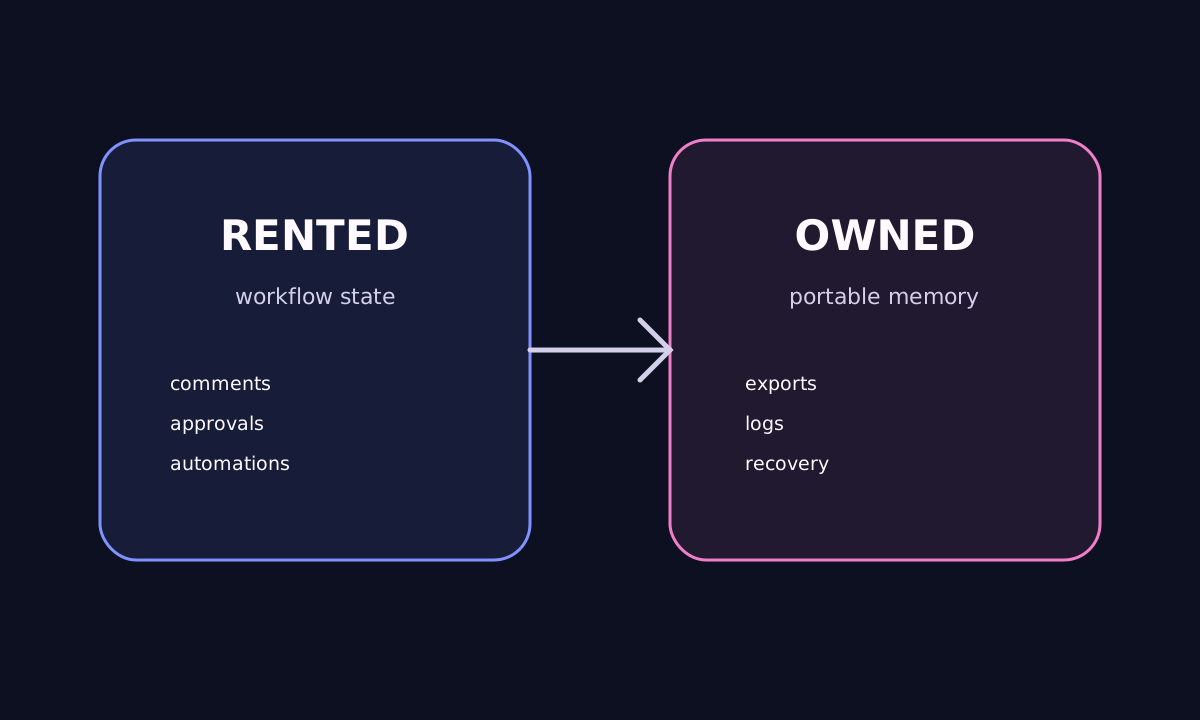
Old lock-in was about file formats and database access. Modern workflow lock-in is higher in the stack. It lives in comments, approvals, automations, prompts, agent traces, routing rules, and the habit of where work starts.
A company may technically export data while still losing the workflow intelligence that made the data useful.
Essay
Automation can deepen captivity
Automation is useful when it reduces repeated work. It becomes captivity when every useful workflow residue stays in a rented surface with weak export, weak audit, or no path back into company memory.
This is why ChipOS treats vendor risk as an operating question, not just a procurement question.
The problem gets sharper in proof-heavy workflows such as sustainability reporting, supplier documentation, lender due diligence, and audit-facing operations. If comments, approvals, evidence links, and revision logic stay trapped inside one platform, the company loses continuity exactly where claims need to stay explainable.
- Can the owner export the decisions, not only the files?
- Can the approval history be audited later?
- Can the workflow move to another tool without starting over?
- Can the company keep memory if the platform changes price or policy?
Essay
The healthy pattern
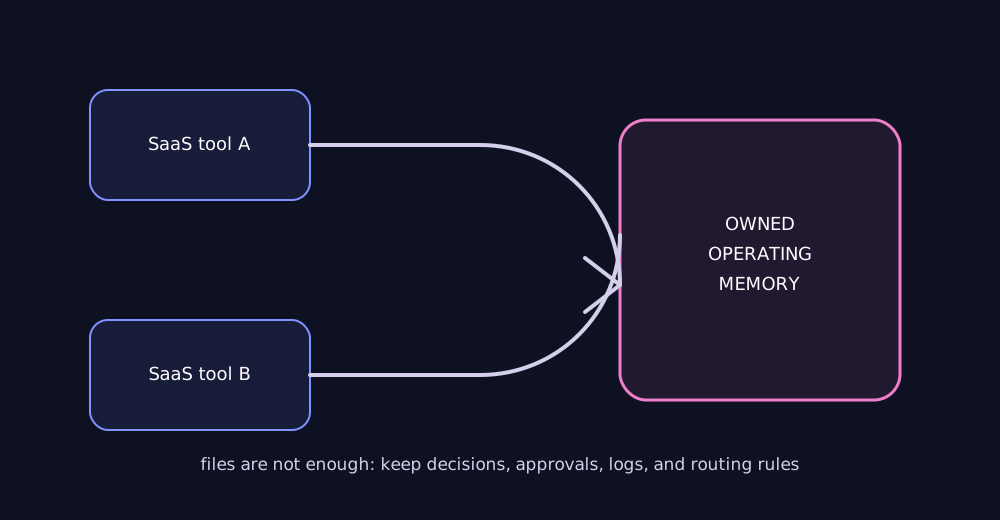
Good SaaS tools can still be part of an owned system. The issue is not whether a company uses external tools. The issue is whether the control layer keeps the map, memory, and movement logic outside any one vendor's trapdoor.
Use the tool. Keep the operating history. That is the balance.
Essay
Public pages and supplier workflows expose captivity first
Website updates, supplier documentation, sustainability claims, and buyer-facing proof packs often reveal captivity faster than internal dashboards do. These workflows cross content, approvals, evidence, and public scrutiny at the same time, so the damage shows up when the team cannot reconstruct what changed or who cleared the claim.
That is why a website service page and a supplier evidence workflow belong in the same ownership conversation. If the contact path, claim history, approval notes, and supporting files live in disconnected SaaS surfaces, the company can publish faster while becoming less able to defend what it published later.
- Public claim pages should keep the approval owner and source path attached.
- Supplier and CBAM-style workflows should return source versions, reviewer notes, and exceptions to owned memory.
- The contact route should stay visible when a buyer needs a human answer instead of another automated step.
- A managed setup is still compatible with ownership if the operating residue stays portable.
Essay
The next move
Audit the workflows that would hurt most if a SaaS vendor changed pricing, access, policy, or export behavior. Then decide what must be mirrored into owned memory before more automation is built on top.
What to keep
The residue.
- SaaS risk is increasingly about workflow intelligence, not only raw data.
- Automation should return memory to the owner.
- A healthy stack can use external tools while keeping the operating layer portable.
- Proof-heavy workflows fail faster when evidence and approvals stay trapped inside rented platforms.
Operator view
Turn the essay into a company decision.
FAQ
Short answers for search and operators.
Is SaaS always bad for ownership?
No. SaaS can be excellent. The issue is whether useful workflow memory, approvals, exports, and audit trails remain available to the owner.
What should a company export or mirror?
Mirror decisions, comments, approvals, automation rules, source links, task state, and reusable workflow notes - not just final files.
How does ChipOS reduce workflow captivity?
ChipOS is designed as an owned layer above tools, so the company can use strong apps while keeping memory, routing, and operating context in a place it controls.
Which workflow should a company audit first for captivity risk?
Start with the workflow that would create the most trust or revenue damage if its comments, approvals, and evidence became hard to reconstruct. For many teams that means a core service page, a supplier documentation flow, or another buyer-facing process rather than an internal note-taking task.
Can a managed website or content workflow still be owned?
Yes, if the company keeps the service language, approval path, evidence notes, exports, and contact route portable. Managed help is not the problem. Captive workflow state is.
Sources
Where this connects inside ChipOS.
- ChipOS NewsUsed for the vendor risk and platform dependency lane.
- AI Audit Trails Need an Owned Evidence LayerUsed for the argument that approvals, evidence links, and workflow residue need to return to an owned audit layer.
- ChipOS Open SourceUsed for the public-source and portability position.
- ChipOS Website ServiceUsed for the practical case where public pages, contact routes, and proof-heavy claims need a more owned publishing and approval path.
Across the ecosystem
Comments
Leave a signal for Chip.
Add a correction, operator note, source context, or practical consequence. Comments enter moderated review before they become public.