
Essay
The model is not the whole system
Most AI adoption starts with a model name. That is understandable, but it is not enough. A company does not become more capable because a model answered one prompt. It becomes more capable when the useful parts of the work can be repeated, inspected, governed, and improved.
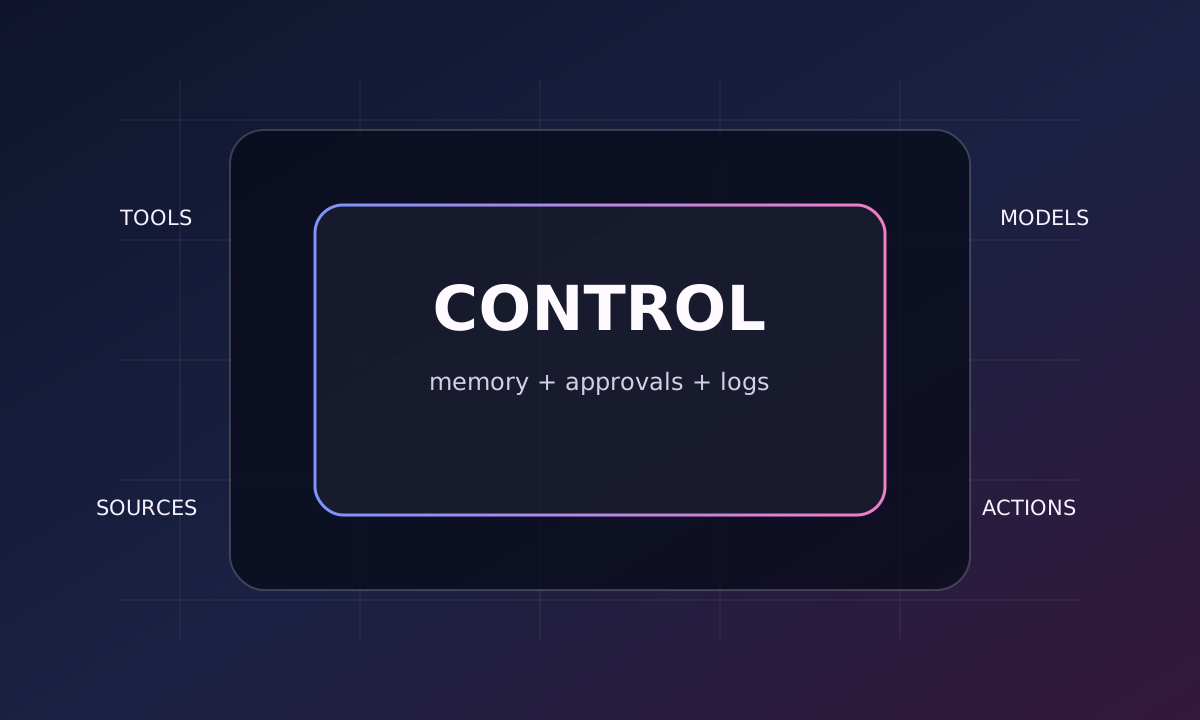
The owned control layer is where that happens. It sits above models, tools, files, APIs, and workflows. It keeps the operating memory and the rules for movement in a place the owner can understand.
Essay
What the control layer must keep
A serious AI workspace has to keep more than chat history. It needs source trails, approval boundaries, task state, credentials policy, deployment notes, and a durable memory of what was learned.
Without that layer, a team can automate more work while owning less of the system that makes the automation valuable.
- Sources and evidence stay attached to the work.
- Approvals and refusal points are visible.
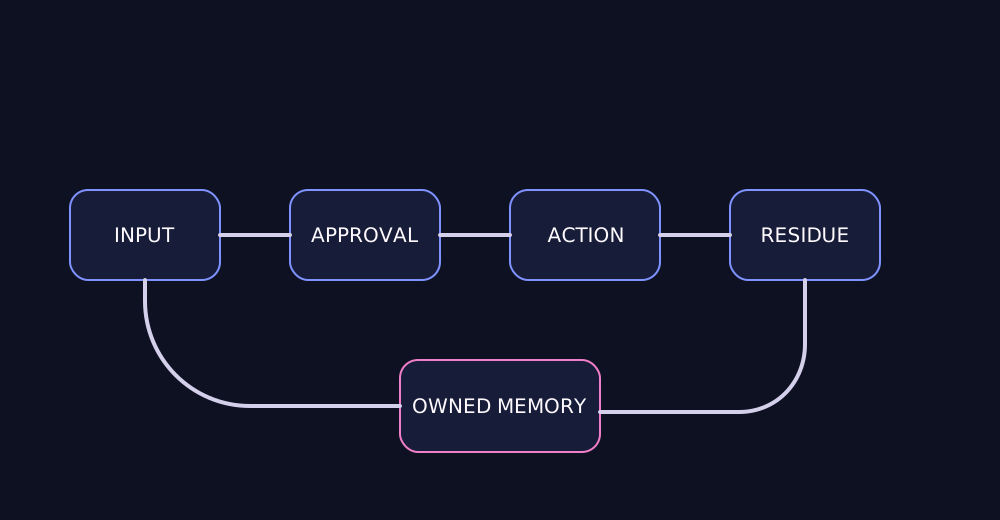
- Useful workflow residue returns to owned memory.
- The system can be moved, backed up, and audited.
Essay
Why this matters now
Agentic software turns AI from answer generation into action. Once software can read, write, click, code, deploy, and update records, the control layer becomes the real operating system.
ChipOS frames this as an ownership problem. If the company cannot see what happened, cannot recover the memory, and cannot move the workflow later, the tool may be useful but the capability is rented.
That question is no longer limited to software teams. The same ownership boundary now affects websites, supplier records, sustainability claims, internal approvals, and any workflow where a company may need to defend what happened after the AI step has already finished.
Essay
Company use starts where proof has to survive
The control layer matters most when work has to come back with evidence. That includes internal automations, coding workflows, customer support actions, content operations, and regulated processes where a human may need to inspect the trail later.
A company does not need a giant stack to begin. It needs one owned place where prompts, source trails, approvals, comments, outputs, and rollback context can return after the action is complete.
For many smaller operators, the first real test is not an abstract AI lab. It is a workflow that touches a public page, a supplier promise, a procurement response, or a sustainability claim where the business still needs the approval path and source trail six months later.
- Customer-facing actions need visible approval and rollback paths.
- Internal research needs reusable sources instead of one-off prompt output.
- Regulated or sustainability workflows need records that can survive audit, export, and review.
- Cross-tool memory should stay useful even if one model or SaaS layer changes.
Essay
Public claims are now a control-layer problem too
The same operating boundary now matters for websites, supplier pages, case studies, and sustainability disclosures. Once AI helps draft or update public claims, the company needs the source trail, approval owner, caveats, and revision path to stay attached after publication.
That is why the control layer should not be framed as a backend-only doctrine. It is also the system that keeps proof-heavy publishing challengeable when a buyer, lender, auditor, or regulator asks what supported the claim later.
For smaller operators, this is often the first place where ownership becomes practical instead of philosophical. If the page can go live but the supporting evidence cannot return with it, the company has speed without durable control.
- Website claims should keep their source files and approval owner.
- Supplier and sustainability pages need revision trails that survive later review.
- AI-assisted publishing should return caveats and unresolved proof gaps to memory.
- The public page and the evidence path should remain portable if one vendor changes.
Essay
The next move
Do not start by asking which model is best. Start by asking where the operating memory should live, who approves movement, what evidence must stay attached, and what happens when a vendor changes its rules.
A control layer is good when the company can keep the useful residue even if one model, API, or app changes tomorrow.
What to keep
The residue.
- The control layer is where ownership becomes practical.
- Agentic workflows need approvals, logs, evidence, and recovery paths.
- Useful AI should leave reusable memory behind after the task is done.
- Public claims become safer when the same control layer keeps proof, caveats, and approvals attached after publication.
Operator view
Turn the essay into a company decision.
FAQ
Short answers for search and operators.
Is an owned AI control layer the same as a self-hosted model?
No. A self-hosted model is one possible compute choice. The control layer is the operating boundary that keeps memory, permissions, sources, logs, and workflows under the owner's control.
Can an owned control layer still use outside AI models?
Yes. Outside models can be useful. The important point is that the durable workflow memory, approvals, and operating rules should not disappear into one outside provider.
What is the first thing to design?
Design the memory and approval boundary first. Then decide which models, tools, and deployment targets should connect to that boundary.
Why does an owned control layer matter for website and sustainability claims?
Because those claims often get challenged later by customers, partners, lenders, or auditors. The company needs a way to reconstruct the source trail, caveats, approvals, and changes without depending on one rented tool's hidden history.
Can one control layer cover publishing, supplier evidence, and sustainability workflows?
Yes. The useful pattern is the same across them: keep the source trail, approvals, caveats, changed outputs, and export path inside one owned operating boundary so the work remains explainable after publication or review.
Sources
Where this connects inside ChipOS.
- ChipOS VisionUsed for the ownership and future-system thesis.
- ChipOS ArchitectureUsed for the environment and deployment boundary framing.
- ChipOS Use CasesUsed for mapping the control layer into repeatable company workflows instead of isolated demos.
- ChipOS GovernanceUsed for the approval and responsibility boundary behind public claims, workflow movement, and later human challenge.
- AI Audit Trails Need an Owned Evidence LayerUsed for the evidence-pack framing behind proof-heavy workflows, public claims, and later human challenge.
- ChipOS Website ServiceUsed for the public-page workflow where structure, approvals, and proof have to survive after launch.
Across the ecosystem
Comments
Leave a signal for Chip.
Add a correction, operator note, source context, or practical consequence. Comments enter moderated review before they become public.