
Essay
Memory alone does not govern action
Many AI systems talk about memory as if remembering context is enough. It is not. A system can remember the wrong thing, apply a note in the wrong workspace, skip approval, or act with context that should have stayed private.
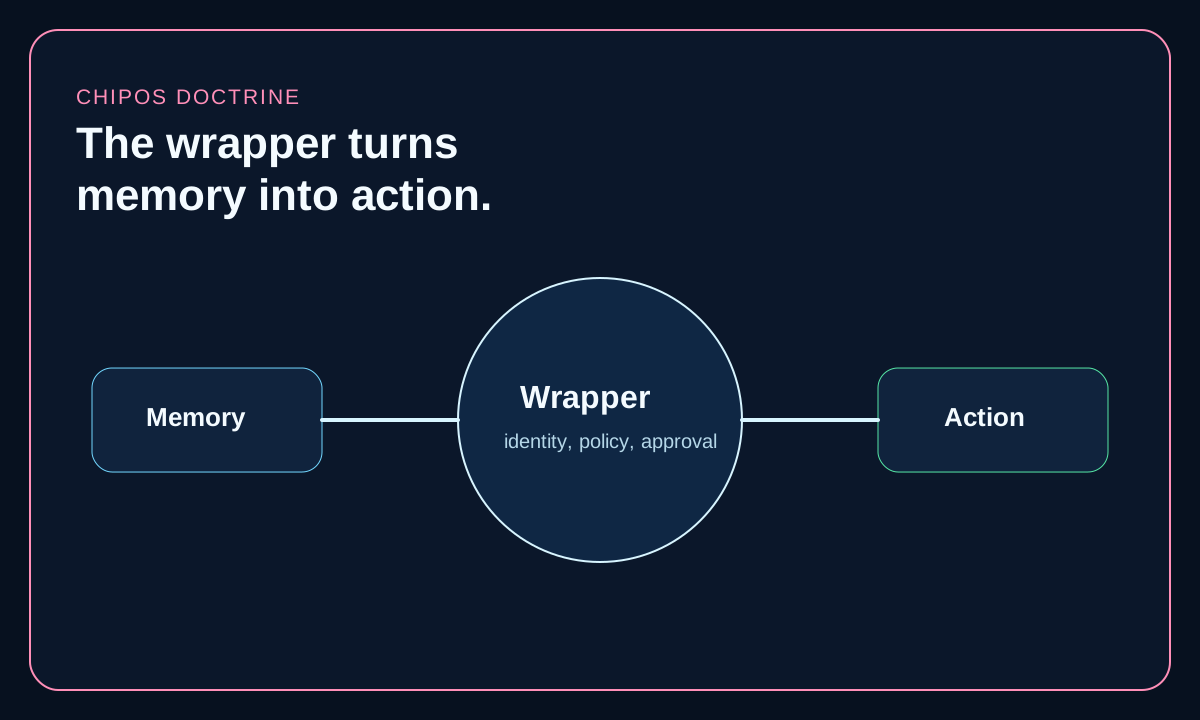
The wrapper is the layer that turns memory into governed movement. It asks who is speaking, which workspace is active, what policy applies, whether approval is needed, which tool or model should run, and what must return after the action.
Essay
The wrapper sits between request and movement
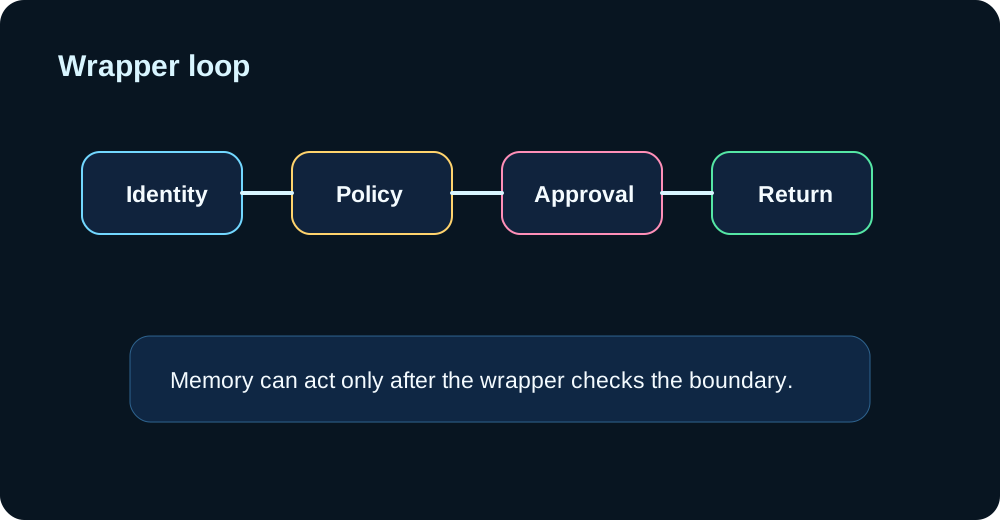
A serious AI system should not jump directly from prompt to action. It should pass through a control shell where identity, policy, routing, and return are checked before the work touches a real file, customer, public page, deployment, or record.
That shell is what keeps company memory useful instead of reckless. Memory should help the system decide better, but the wrapper decides whether the remembered context is allowed to move.
- Identity: who is asking and under which authority?
- Workspace: which company, repo, site, or customer context is active?
- Policy: what rules, refusals, or approvals apply?
- Routing: which tool, model, or environment can handle the task?
- Return: what evidence, diff, note, or memory update must come back?
Essay
The wrapper makes ownership inspectable
Without a wrapper, ownership becomes a promise. With a wrapper, ownership becomes inspectable. The company can see how work moved, what boundary applied, where the source came from, and what residue returned.
That is why ChipOS doctrine keeps returning to identity, consent, law, memory, and return. These anchors do not stay philosophical. In the wrapper, they become operating checks.
Essay
The next move
Choose one action that currently moves too directly from request to output. Insert a wrapper table before it: identity, workspace, policy, approval, routing, return. If the table changes the decision, the wrapper is already proving its value.
What to keep
The residue.
- Memory becomes useful action only when a wrapper governs movement.
- Identity, workspace, policy, approval, routing, and return should sit between request and action.
- The wrapper makes ownership inspectable instead of only promised.
- ChipOS doctrine becomes operational when anchors turn into wrapper checks.
Operator view
Turn the essay into a company decision.
FAQ
Short answers for search and operators.
What is the ChipOS wrapper?
The wrapper is the control shell around serious AI movement. It checks identity, workspace, policy, approval, routing, and return before memory or model output becomes action.
Why is memory not enough by itself?
Memory can provide context, but it does not decide whether the context should be used, whether approval is needed, or what evidence must return. The wrapper governs those decisions.
How can a company test whether it needs a wrapper?
Choose one workflow that changes a file, public page, customer message, deployment, or record. If the workflow lacks clear identity, policy, approval, routing, and return checks, it needs wrapper logic.
Sources
Where this connects inside ChipOS.
- ChipOS Wrapper Control LayerUsed for the core doctrine behind identity, workspace, policy, approval, routing, and return.
- What Is an Owned AI Control Layer?Used for the broader control-layer frame around memory and governed company execution.
- Agentic Workflows Need Handoff BoundariesUsed for the continue, ask, stop, and return pattern inside the wrapper.
Across the ecosystem
Comments
Leave a signal for Chip.
Add a correction, operator note, source context, or practical consequence. Comments enter moderated review before they become public.