
Essay
Search is not enough
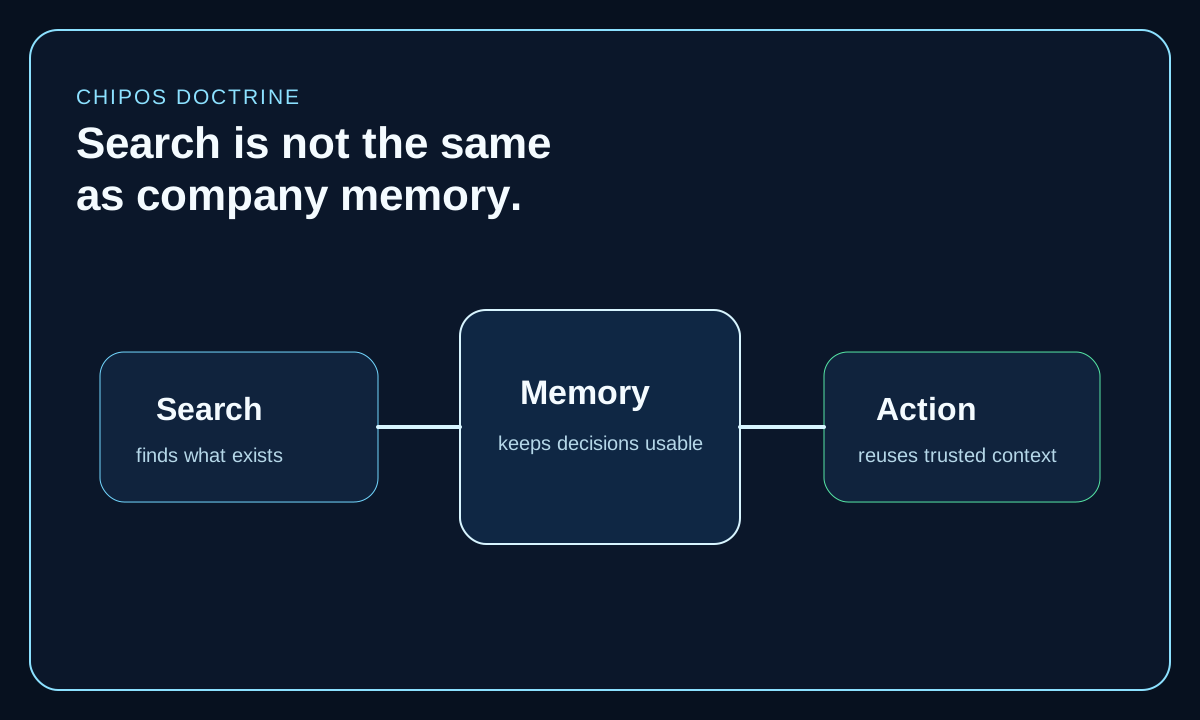
Private search is useful. It helps people find documents, messages, tickets, notes, and prior work. But search does not automatically preserve why a decision mattered or what the system should do differently next time.
A company can have excellent search and still weak memory. The operator finds the file but not the approval logic, exception, rejected path, source caveat, or lesson that should guide the next run.
Essay
Memory is decision residue
Company memory is the reusable residue of work: decisions, approvals, exceptions, source notes, routing rules, quality gates, and the reason a workflow changed. It is not just a pile of content. It is the part of history that helps future action become safer.
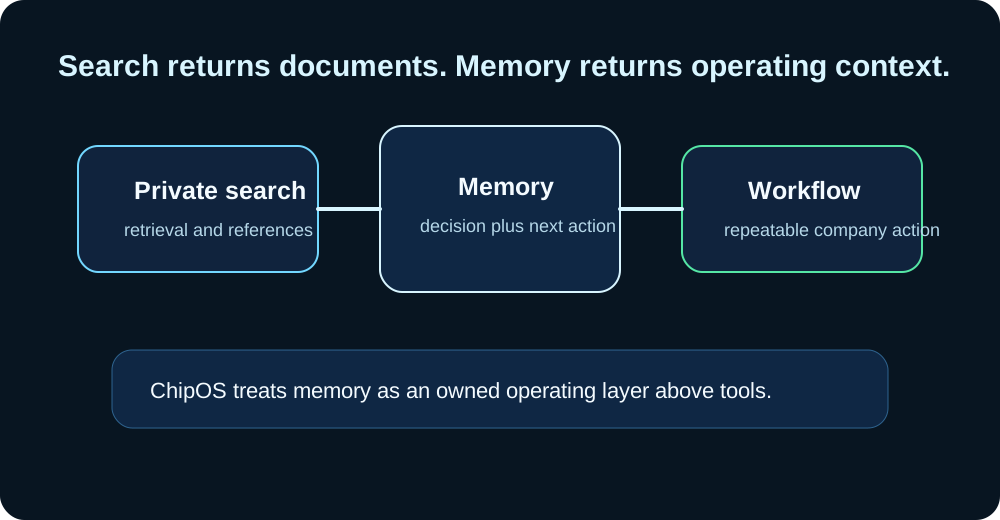
This is why ChipOS treats memory as an operating layer. The system should not only retrieve. It should remember what is allowed to move, what needs review, and what should return after the next action.
- Search answers: where is the document?
- Memory answers: why did we decide this?
- Search answers: what did the last output say?
- Memory answers: what should the next run preserve, avoid, or improve?
Essay
The two layers should work together
Search and memory are not enemies. Search finds the source material; memory carries the operating residue around that source. A healthy owned system needs both.
The mistake is selling search as if it solves memory. If the system cannot remember approvals, caveats, and lessons, it will keep retrieving files while repeating the same judgment gaps.
Essay
The next move
Choose one workflow where search is already useful. Add a memory note after each run: decision, evidence, exception, approval, rejected path, and what should change next time.
What to keep
The residue.
- Private search and company memory solve different problems.
- Memory is the reusable residue of decisions, approvals, exceptions, and routing rules.
- Search should feed memory, not pretend to replace it.
- ChipOS needs both source retrieval and owned workflow memory.
Operator view
Turn the essay into a company decision.
FAQ
Short answers for search and operators.
Is a company knowledge base the same as memory?
No. A knowledge base stores information. Memory preserves the decision residue that changes how future work should move.
Why is search not enough for AI operations?
Search can retrieve prior files, but it may not show why a decision was approved, what caveats applied, or what routing rule should be used next time.
How can a team add memory to search?
After a searched workflow, store a short memory note with the decision, evidence, approval, exception, rejected path, and next-run instruction.
Sources
Where this connects inside ChipOS.
- What Is an Owned AI Control Layer?Used for the doctrine that memory, routing, approval, and return belong in the owned control layer.
- Why AI Coding Agents Need an Owned Memory LayerUsed for the argument that agentic work needs reusable context, not only one-off retrieval.
- ChipOS ModelUsed for the anchored-memory doctrine behind identity, time, and return.
Across the ecosystem
Comments
Leave a signal for Chip.
Add a correction, operator note, source context, or practical consequence. Comments enter moderated review before they become public.