
Essay
The patch is only the visible output
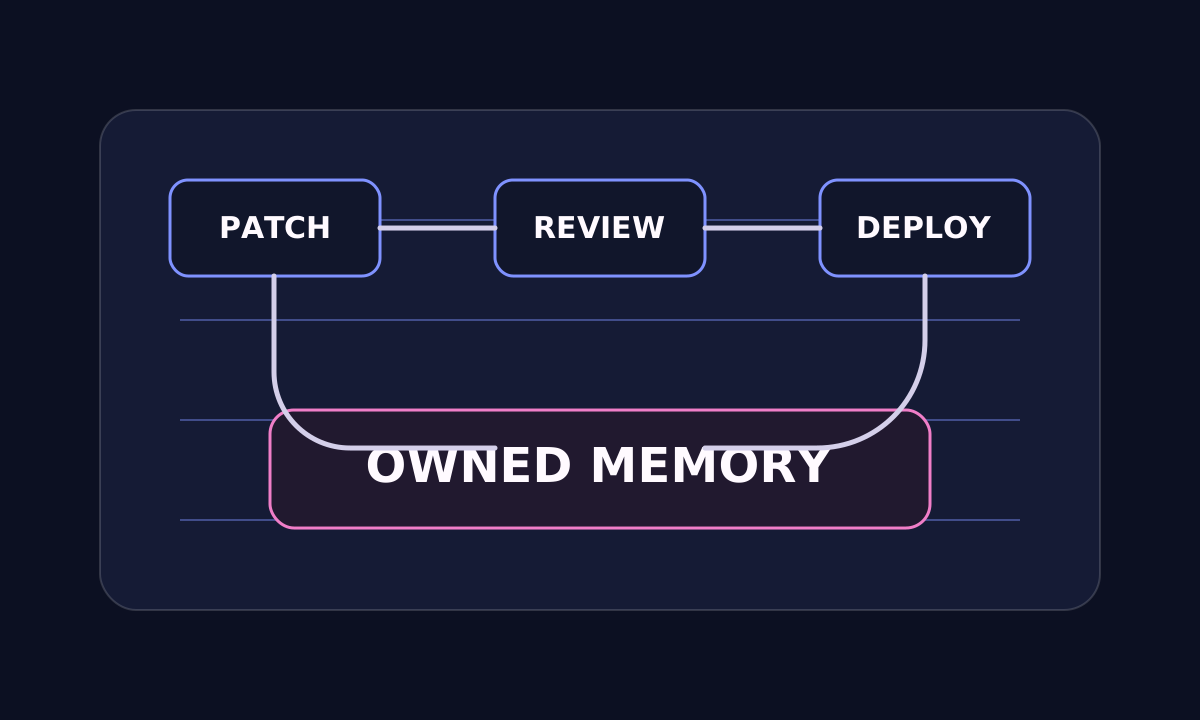
A coding agent can write code, run checks, and open a pull request. That output matters, but it is not the whole value. The stronger value is the trail of decisions that made the output safe enough to trust.
When that trail stays inside a closed tool, the team may get the patch while losing the learning. The next task starts colder than it should.
The hidden cost appears during review. A maintainer wants to know which files were considered risky, which commands actually passed, which path was rejected, and why the final edit was chosen. If that context vanishes with the session, the agent saved typing but did not improve the operating system around the code.
Essay
Owned memory makes agents compound
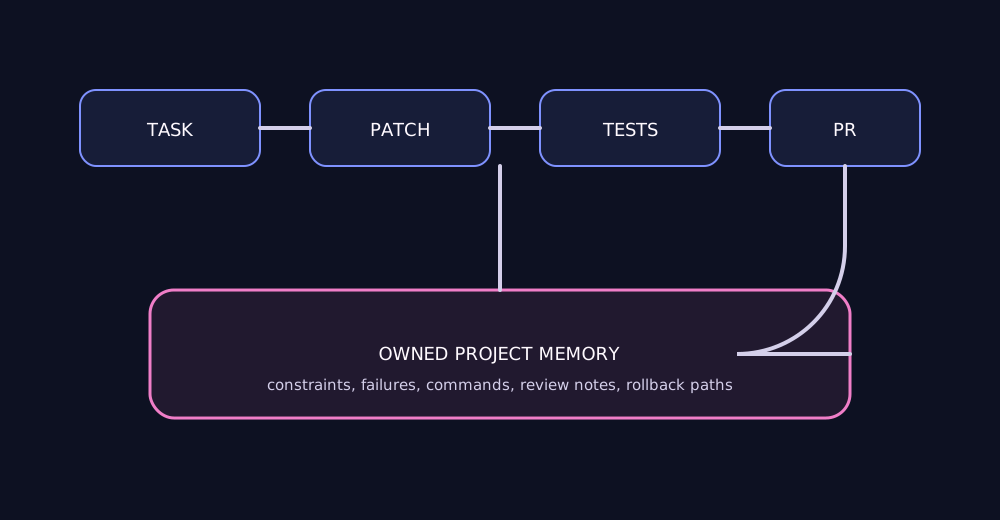
A good agent run should leave a reusable memory: project constraints, test commands, deployment paths, dangerous files, reviewer preferences, and decisions that should not be rediscovered.
That memory should be portable across tools. A company should be able to change agent providers without losing the operating knowledge created by previous work.
This is the difference between a clever assistant and a compounding system. The assistant finishes a task. The system leaves behind memory that makes the next task safer, faster, and easier to challenge.
- Commands that actually validated the change.
- Files and routes that must be treated carefully.
- Design or product decisions made during the task.
- Known blockers, rollback paths, and follow-up risks.
Essay
Review is part of the system
Agentic development does not remove review. It changes what review has to see. Reviewers need the why, the proof, and the boundary, not just a diff.
The owned layer should collect that context before the work moves into production. That is how agents become part of a controlled software process instead of a faster way to create uncertainty.
A useful review packet can be lightweight, but it has to survive the session that generated it. The team should be able to recover the commands, reviewer notes, caveats, and rollback signal without depending on one vendor's conversation history.
Essay
Deployment residue matters as much as generation
The coding agent problem does not stop at the merge button. Once a change moves toward staging or production, the team also needs the deployment residue: which environment was touched, which secrets or flags mattered, what failed first, what was retried, and who finally approved movement.
Without that residue, the company turns every later incident into re-discovery. The patch exists, but the release memory does not. That weakens rollback, postmortems, and the next automation cycle that should have started from known conditions instead of guesswork.
- Store which validation commands passed in CI versus only locally.
- Keep rollout notes, failed attempts, and manual overrides attached to the change.
- Record the approval owner for production movement, not only the person who prompted the agent.
- Return incident notes and reversions to the same memory layer the next agent will read.
Essay
Proof-heavy teams expose the memory gap first
Software teams feel the memory problem early, but regulated and proof-heavy operators feel it even faster. The same missing context that hurts a code review also hurts a sustainability workflow, a supplier evidence pack, or a website claim that later faces customer or lender challenge.
That is why coding-agent memory should be read as part of the wider owned-evidence model. If a company wants agents touching content systems, internal tooling, supplier documentation, or buyer-facing pages, the memory handoff has to preserve explanation across both code and proof workflows.
ChipOS treats this as one operating pattern: the work should return with commands, caveats, approvals, and residue attached whether the output is a patch, a published page, or a reviewable evidence pack.
Essay
The next move
Before adopting another coding agent, decide where its memory lands. If useful notes, commands, failures, and decisions cannot return to a system you own, the agent may increase speed while weakening continuity.
Start with one workflow where review, rollback, and deployment memory already matter. Define the handoff before adding more autonomy.
What to keep
The residue.
- Agent output is less important than reusable operating memory.
- Review needs evidence, rejected paths, and deployment proof.
- Changing agent vendors should not erase what the team learned.
- Proof-heavy workflows expose the same memory failure outside pure software teams.
Operator view
Turn the essay into a company decision.
FAQ
Short answers for search and operators.
What should a coding-agent memory layer store?
It should store constraints, validation commands, review notes, failed attempts, deployment paths, risky files, rollback notes, and decisions that future agents should reuse.
Does this replace Git history?
No. Git stores code history. The owned memory layer stores operating context around the work: why it happened, how it was checked, and what should be remembered next time.
Why is provider portability important?
Agent providers will change. The company should keep the workflow memory even if the tool used to perform one task changes later.
Why is deployment memory different from Git history?
Git history records what changed in the repository. Deployment memory records what happened around release: which checks mattered, which environment was touched, who approved movement, what failed, and what the team should remember before the next rollout.
When does this become more than a developer workflow issue?
It becomes broader as soon as coding agents touch content systems, customer-facing pages, internal tooling, supplier workflows, or evidence-heavy operations. The same memory problem then affects not only code quality, but also trust, auditability, and later explanation.
Sources
Where this connects inside ChipOS.
- ChipOS NewsUsed for the agentic workflow and developer-tools editorial lane.
- AI Audit Trails Need an Owned Evidence LayerUsed for the argument that commands, approvals, exceptions, and operator judgment have to return to owned evidence instead of staying trapped in a tool session.
- ChipOS ModelUsed for the memory, movement, residue, and return framing.
- Self-Hosting Is a Workflow DecisionUsed for the deployment-boundary argument around logs, rollback, credentials, and release memory.
- ChipOS Use CasesUsed for the company-workflow mapping from coding assistance into owned operating routines.
Across the ecosystem
Comments
Leave a signal for Chip.
Add a correction, operator note, source context, or practical consequence. Comments enter moderated review before they become public.