
Essay
A prompt pile is not operations
Many teams adopt AI by collecting prompts. Someone writes a good sales prompt, another person keeps a research prompt, and a founder stores a few automation instructions in a private chat. It feels like progress until the same work has to be repeated by another person, audited after a mistake, or moved to a different model.
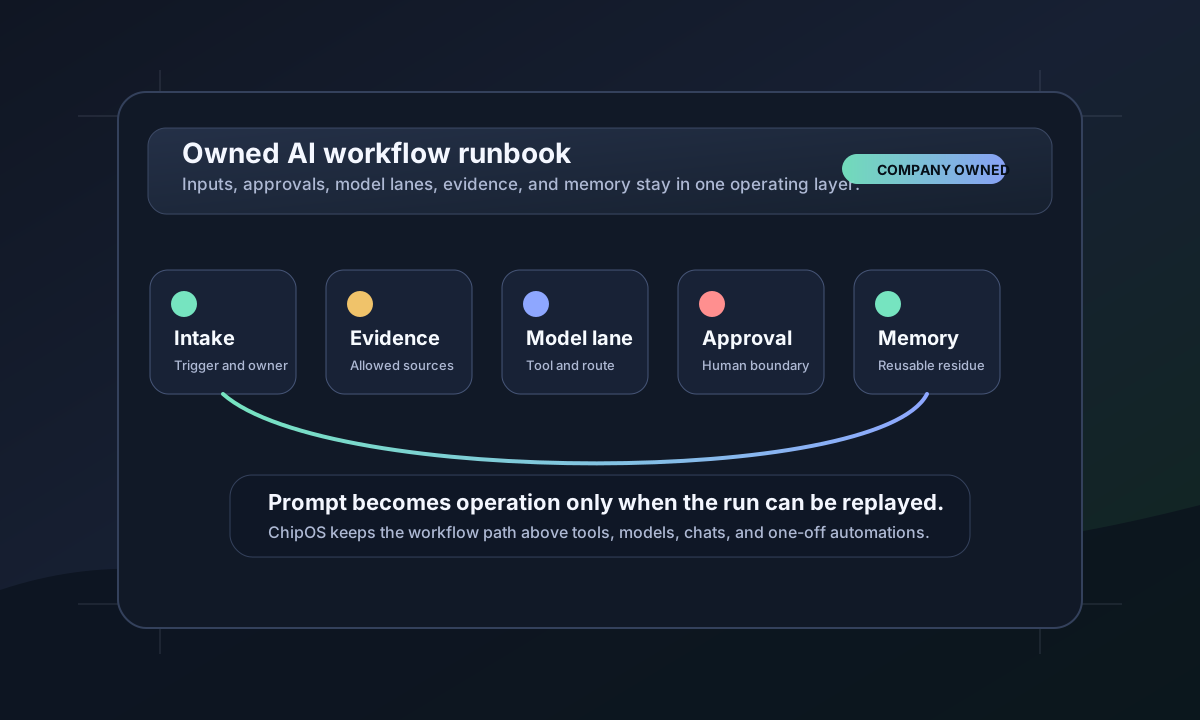
The problem is not that prompts are useless. The problem is that prompts are only one part of the operating path. A real workflow also needs inputs, source rules, approval boundaries, output checks, escalation logic, and a place where the result becomes reusable memory.
Essay
The runbook is the product surface
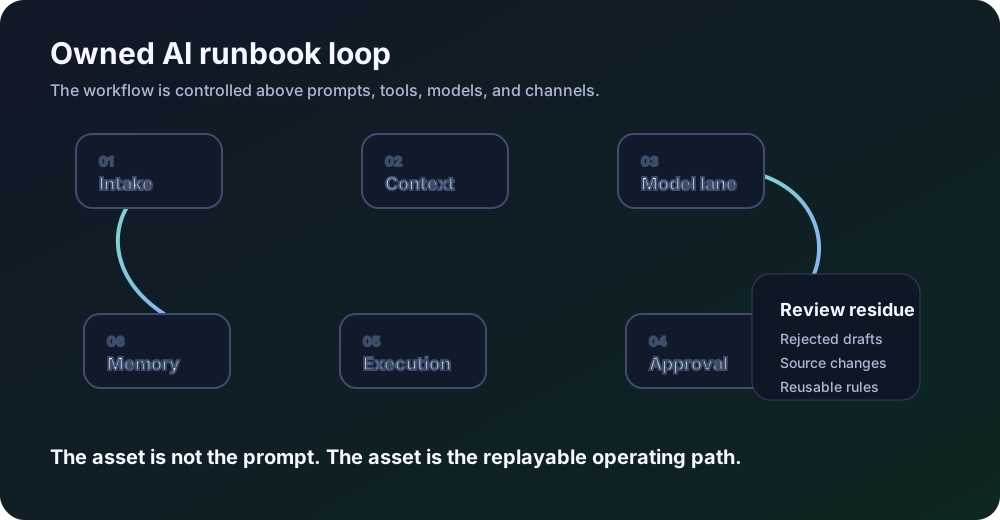
ChipOS treats an AI workflow as a runbook before it treats it as automation. The runbook says what starts the work, which sources are allowed, which model or tool can be used, what must be reviewed, who can approve, where the result is published, and what gets stored afterward.
That structure matters because it makes AI work transferable. A new teammate can run it. A founder can inspect it. A service partner can improve it. A different model can execute part of it without taking the workflow memory away from the company.
- What event starts this workflow?
- Which sources, files, or live pages are authoritative?
- Which outputs require human review before they move?
- Where are decisions, evidence links, and rejected drafts stored?
- What should the company learn before the next run?
Essay
Agent workflows need operating boundaries
Agentic tools are strongest when the job is bounded. They can gather context, draft options, compare evidence, update a page, or prepare a customer response. They become risky when nobody can say which step is allowed to move, which step needs approval, or how the result returns to company memory.
An owned runbook gives the agent lane a boundary. It can define read-only research, draft-only production, approval-required publishing, and post-run review as separate states. That keeps automation useful without making every workflow a black box.
Essay
Start with one revenue or trust workflow
The first runbook should be narrow. Pick one workflow where a bad answer, missing source, or unclear approval would create real business cost. Good candidates include a website service page update, supplier questionnaire response, customer support escalation, buyer research brief, or onboarding handoff.
For that workflow, write down the trigger, sources, owner, model lane, review rule, final destination, and memory update. Then run it manually with AI assistance before trying to automate more of it. The goal is not speed first. The goal is repeatable judgment.
Essay
Owned operations compound
The business value appears after repetition. The first runbook saves confusion. The fifth creates a shared operating language. The tenth starts to show which work should stay manual, which work can be assisted, and which work can safely become more automated.
That is the ChipOS position: AI should not only answer inside a rented tool. It should help the company build an owned service layer where workflows, memory, evidence, and approval logic keep compounding under the operator's control.
What to keep
The residue.
- A prompt that worked once is not yet an operating system.
- AI workflows need owned runbooks with inputs, approvals, evidence, and memory updates.
- Agentic work is safer when read, draft, approve, execute, and review states are explicit.
- The first implementation should target one revenue or trust-critical workflow.
Operator view
Turn the essay into a company decision.
FAQ
Short answers for search and operators.
What is an owned AI workflow runbook?
It is a company-controlled operating record that defines the trigger, sources, tools, model lane, approval rules, output checks, and memory update for a repeated AI-assisted workflow.
How is a runbook different from a prompt library?
A prompt library stores instructions. A runbook stores the whole workflow around those instructions, including owners, evidence, approval boundaries, final destinations, and lessons from previous runs.
Which AI workflow should a team document first?
Start with a repeated workflow where trust, revenue, or customer experience is at stake, such as a service page update, buyer response, support escalation, supplier questionnaire, or onboarding handoff.
Does ChipOS require every workflow to be fully automated?
No. ChipOS starts by making the workflow inspectable and repeatable. Automation can increase only after the business understands which steps are safe to delegate and which still need human approval.
Sources
Where this connects inside ChipOS.
- ChipOS Use CasesUsed for mapping AI workflow operations to practical founder, team, and service workflows.
- ChipOS ServicesUsed for the managed setup path when repeated AI work needs implementation help.
- Agentic Workflows Need Handoff BoundariesUsed for the argument that agent workflows need explicit movement and review boundaries.
- AI Audit Trails Need an Owned Evidence LayerUsed for the evidence and approval trail behind repeatable AI operations.
Across the ecosystem
Comments
Leave a signal for Chip.
Add a correction, operator note, source context, or practical consequence. Comments enter moderated review before they become public.