
Essay
Autonomy is not the first design problem
Most agent discussions start with how much the system can do alone. That is understandable, but it skips the operating question that matters more: where should the work hand off before it changes something real?
A useful agent does not only execute. It understands the boundary between draft, decision, action, and return. Without that boundary, more autonomy only makes the failure larger and harder to reconstruct.
Essay
A handoff boundary is an operating rule
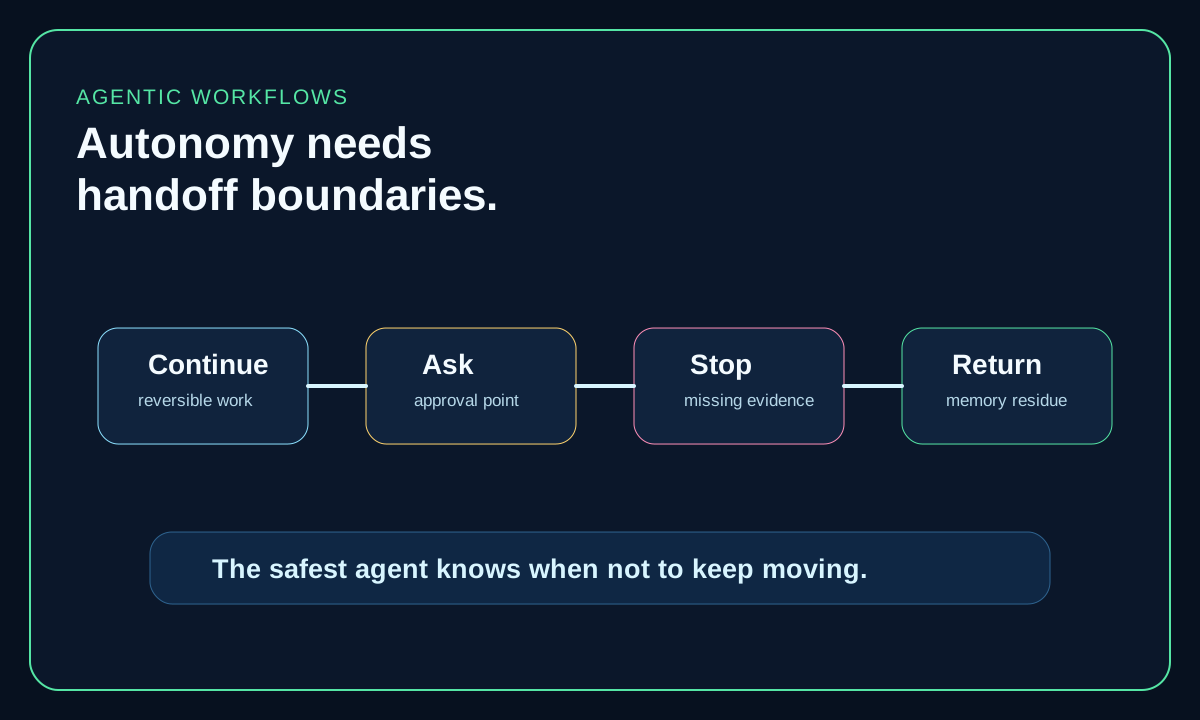
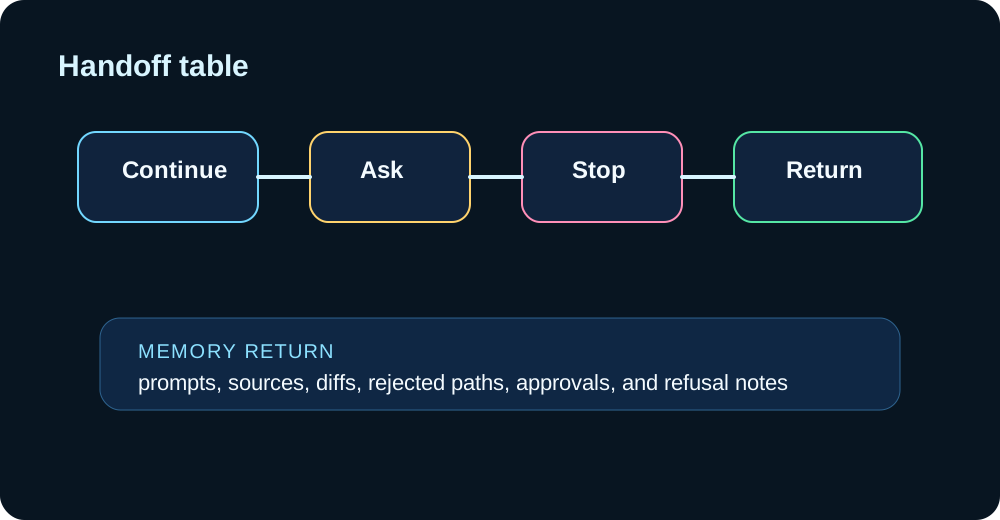
A handoff boundary tells the agent when to continue, when to ask, when to stop, and what to return. It is not only a safety brake. It is the structure that lets the owner trust repeated agentic work without reviewing every low-risk step from zero.
The boundary should be visible before the agent starts. If the system discovers the rule only after it is already acting, the owner has lost the most important moment of control.
- Continue when the task is reversible, low-risk, and inside the approved path.
- Ask when the task changes cost, source, public language, customer expectation, or deployment state.
- Stop when evidence is missing, identity is uncertain, policy is unclear, or the next step would create irreversible movement.
- Return prompts, sources, diffs, rejected paths, and approval notes to owned memory.
Essay
The owner needs the residue, not only the result
Agentic workflows can create a polished final output while hiding the steps that made the output acceptable. That is a problem for any company that needs to defend public claims, code changes, customer messages, supplier records, or compliance-facing decisions.
The durable value is the residue: what the agent saw, what it ignored, where it paused, which options were rejected, and why the owner allowed the final movement. That residue should not disappear into a chat window or tool log the team cannot reuse later.
Essay
Start with one boundary, not a giant agent platform
The practical path is to choose one workflow and define its handoff points. A website claim update, a supplier evidence pack, a code change, or a model-routing decision can each become a controlled agentic pattern before the company tries to automate everything.
ChipOS treats that pattern as part of the owned control layer. The agent can use external tools, but the permission map, evidence trail, and memory return should belong to the operator.
What to keep
The residue.
- Agentic workflows need handoff boundaries before they need more autonomy.
- A useful agent knows when to continue, ask, stop, and return evidence.
- The owner needs the residue of the workflow, not only the final output.
- One clear boundary is a better start than a giant uncontrolled agent platform.
Operator view
Turn the essay into a company decision.
FAQ
Short answers for search and operators.
What is a handoff boundary in an AI agent workflow?
It is the rule that defines when an agent can continue, when it must ask for approval, when it must stop, and what evidence or memory it must return before the work is considered complete.
Does a handoff boundary make agents less useful?
No. It makes agentic work easier to trust because low-risk steps can move faster while high-risk steps are clearly paused, reviewed, or refused.
Which agentic workflow should a company test first?
Start with a workflow that is repeated often but has visible risk, such as website claim updates, supplier evidence preparation, code changes, customer replies, or model-routing decisions.
Sources
Where this connects inside ChipOS.
- ChipOS Wrapper Control LayerUsed for the rule that identity, workspace, policy, approval, routing, and return must surround serious movement.
- Why AI Coding Agents Need an Owned Memory LayerUsed for the argument that agentic work should return context and decisions to owned memory.
- AI Audit Trails Need an Owned Evidence LayerUsed for the evidence-return pattern that makes agentic actions reviewable later.
Across the ecosystem
Comments
Leave a signal for Chip.
Add a correction, operator note, source context, or practical consequence. Comments enter moderated review before they become public.