
Essay
Speed can hide review debt
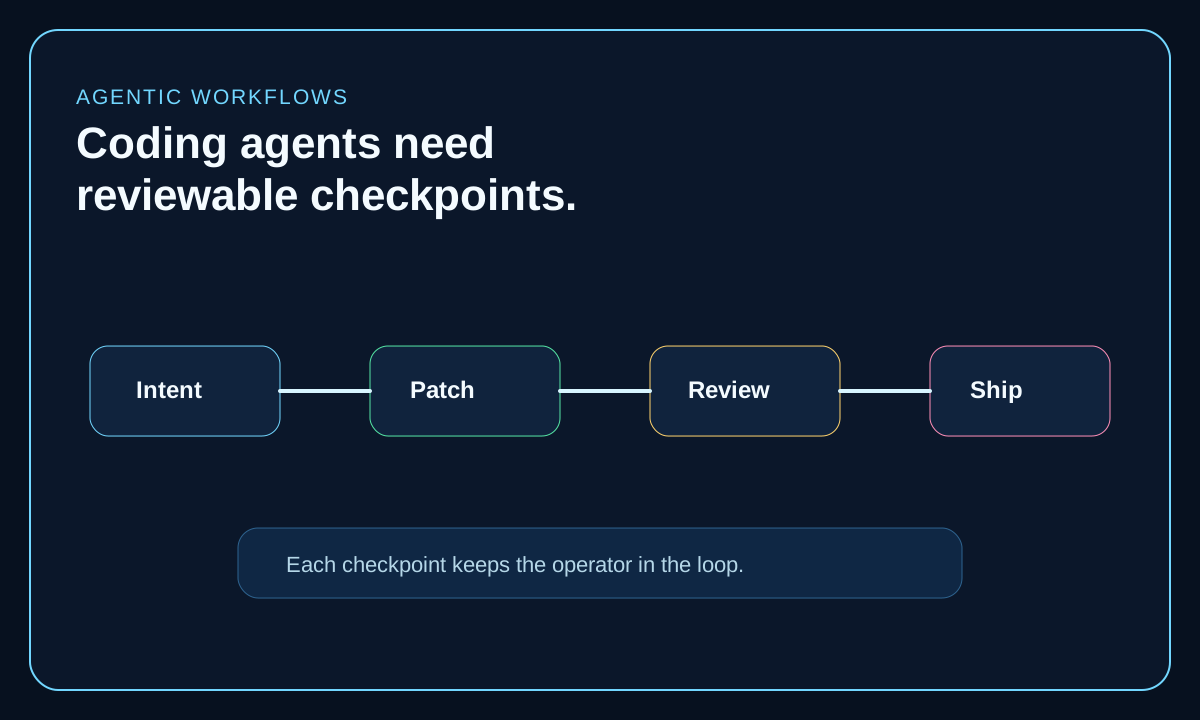
AI coding agents can move through code quickly. That is useful when the work is bounded, but dangerous when the agent changes too much before the human can understand the path.
The hidden cost is review debt. The team receives a result, but not enough checkpoints to know which assumption mattered, which file carried the risk, which test proved the change, or which follow-up should return to memory.
Essay
A checkpoint makes action reviewable
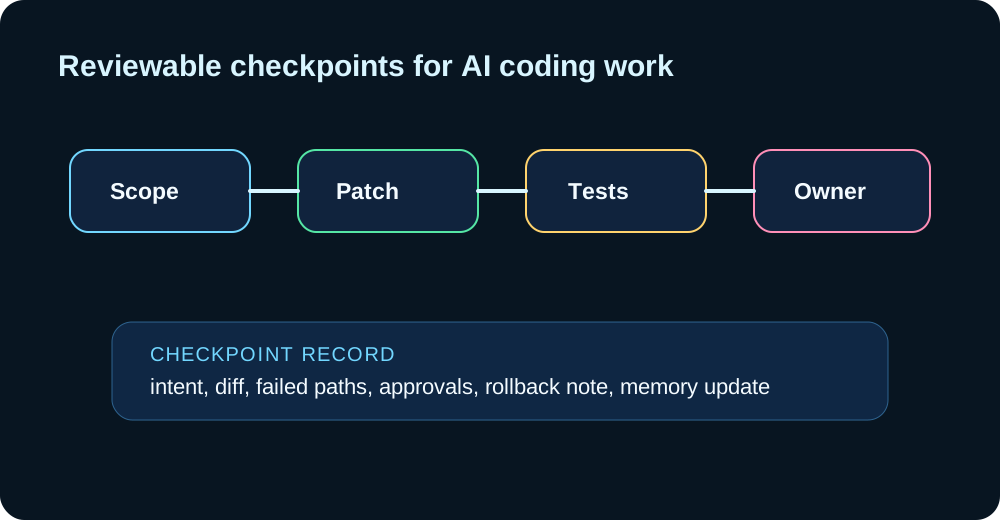
A checkpoint is a small review surface between intention and movement. It can be a plan, a changed file list, a focused diff, a test result, a risk note, or a memory update that explains why the next step is safe.
Coding agents need these checkpoints because code is not only output. It is infrastructure that future operators inherit.
- Plan before editing when the task spans multiple files.
- Keep diffs small enough for a human to inspect.
- Attach test or build evidence before claiming completion.
- Return assumptions, rejected paths, and follow-up risks to memory.
Essay
The wrapper should control file movement
The coding agent should not decide alone when a change is ready. The wrapper should know which files are sensitive, which tests matter, whether unrelated changes exist, and when review is required before commit or deployment.
This is where owned memory helps. The system can remember prior decisions, but the wrapper turns that memory into controlled movement.
Essay
The next move
Define one coding-agent checkpoint policy: plan, diff, test, review, memory. Then apply it to the next multi-file change before the agent is allowed to move faster.
What to keep
The residue.
- Coding-agent speed needs reviewable checkpoints.
- Small diffs, test evidence, and risk notes reduce review debt.
- The wrapper should govern file movement and deployment boundaries.
- Memory should explain why changes were made, not only that they passed.
Operator view
Turn the essay into a company decision.
FAQ
Short answers for search and operators.
What is review debt in AI coding?
Review debt appears when an agent produces changes faster than humans can understand the assumptions, risks, tests, and future maintenance impact.
What checkpoint matters most for coding agents?
The most important checkpoint is usually the focused diff with test evidence and a short risk note, because it lets a reviewer connect intent, code, and verification.
Should coding agents commit automatically?
Only inside a clear wrapper policy. Sensitive files, broad diffs, failing tests, or unrelated local changes should force review before commit or deployment.
Sources
Where this connects inside ChipOS.
- Why AI Coding Agents Need an Owned Memory LayerUsed for the memory-return principle around agentic code work.
- Agentic Workflows Need Handoff BoundariesUsed for the continue, ask, stop, return pattern.
- ChipOS Wrapper Control LayerUsed for the wrapper rule that governs movement before tools act.
Across the ecosystem
Comments
Leave a signal for Chip.
Add a correction, operator note, source context, or practical consequence. Comments enter moderated review before they become public.