
Chip watches AI labs, developer platforms, infrastructure providers, security desks, and company-tool sources through crawl-ready RSS/Atom feeds.
Agentic Workflows
Cloudflare: How Cloudflare detects MCP traffic and helps secure itWeaviate: Weaviate 1.38 ReleaseElastic: The search multiplier: Driving revenue, productivity, and AI at scaleHugging Face: Record, train, and deploy from one place with Strands Agents, LeRobot, and Hugging Face Storage BucketsMongoDB: Build Trust in Agentic AI: From POC to ProductionCloudflare: How Cloudflare detects MCP traffic and helps secure itWeaviate: Weaviate 1.38 ReleaseElastic: The search multiplier: Driving revenue, productivity, and AI at scaleHugging Face: Record, train, and deploy from one place with Strands Agents, LeRobot, and Hugging Face Storage BucketsMongoDB: Build Trust in Agentic AI: From POC to Production
Agent workflows desk
Agents, MCP systems, approval loops, memory, automation, and tool-use reliability.

AI systems climateExecution pressure
Agent reliabilityActive
Company adoptionRising
Developer toolingHot
Model pressureMedium
Security reviewHigh
Vendor controlWatched
Agent workflowsStructural ShiftCloudflareAug 14, 2026
How Cloudflare detects MCP traffic and helps secure it
How Chip reads the feed
Filter the lane and explain what changed.
Stories are kept when they affect tools, agents, models, APIs, infrastructure, security, governance, vendor control, or company workflows.
Each item receives a lane, signal label, company-use note, control question, deployment risk, next move, and readable brief page.
Agent workflowssignals
The filtered stories most likely to change tools, workflow ownership, permissions, cost, or operating control.
New Tool SignalWeaviate
Weaviate 1.38 Release
Check whether the agent can be scoped to a narrow company workflow with approvals, logs, rollback, and reusable memory.

Structural ShiftElastic
The search multiplier: Driving revenue, productivity, and AI at scale
Check whether the agent can be scoped to a narrow company workflow with approvals, logs, rollback, and reusable memory.

Structural ShiftHugging Face
Record, train, and deploy from one place with Strands Agents, LeRobot, and Hugging Face Storage Buckets
Check whether the agent can be scoped to a narrow company workflow with approvals, logs, rollback, and reusable memory.
Structural ShiftMongoDB
Build Trust in Agentic AI: From POC to Production
Check whether the agent can be scoped to a narrow company workflow with approvals, logs, rollback, and reusable memory.

Structural ShiftTechCrunch AI
Nvidia just showed that the harness, not the AI model, is now the real hero
Check whether the agent can be scoped to a narrow company workflow with approvals, logs, rollback, and reusable memory.

Structural ShiftThe Decoder
Study explains why AI agents benefit from "skills" and when they fail
Check whether the agent can be scoped to a narrow company workflow with approvals, logs, rollback, and reusable memory.

New Tool SignalThe Decoder
Deepseek releases experimental Flash vision model that rivals Opus 4.8 on agent benchmarks
Check whether the agent can be scoped to a narrow company workflow with approvals, logs, rollback, and reusable memory.
Structural ShiftZapier
What is ChatGPT Work?
Check whether the agent can be scoped to a narrow company workflow with approvals, logs, rollback, and reusable memory.
Structural ShiftAWS Machine Learning
Scaling agentic AI: Enterprise patterns without vendor lock-in
Check whether the agent can be scoped to a narrow company workflow with approvals, logs, rollback, and reusable memory.
Structural ShiftMongoDB
Fighting Tool Sprawl: The Case for AI Tool Registries
Check whether the agent can be scoped to a narrow company workflow with approvals, logs, rollback, and reusable memory.
Structural ShiftAWS Machine Learning
Authoring Dogwood policies from natural language in Amazon Bedrock AgentCore
Check whether the agent can be scoped to a narrow company workflow with approvals, logs, rollback, and reusable memory.
Structural ShiftLangChain
AgentCore Payments middleware for LangChain agents
Check whether the agent can be scoped to a narrow company workflow with approvals, logs, rollback, and reusable memory.
Category lane
One lane. Supporting angles.
The category page keeps the same operating-desk structure while narrowing the crawl to one decision lane.
Agent workflows
How Cloudflare detects MCP traffic and helps secure itCloudflare · Aug 14, 2026Weaviate 1.38 ReleaseWeaviate · Jun 25, 2026The search multiplier: Driving revenue, productivity, and AI at scaleElastic · Aug 20, 2026Record, train, and deploy from one place with Strands Agents, LeRobot, and Hugging Face Storage BucketsHugging Face · Aug 13, 2026Latest Agent workflows
Newest matching crawl items after the category lead and structural rail, still written as operating notes rather than hype headlines.
AWS Machine LearningStructural ShiftAgentic Workflows
Build a no-code ML workflow with Snowflake, Amazon SageMaker Canvas and Amazon Quick – Part 1: Setting up your Snowflake environment
Healthcare, retail, and life sciences organizations generate massive quantities of operational data in cloud data warehouses like Snowflake. While these systems store and scale information efficiently,... Why it matters: Check whether the agent can be scoped to a narrow company workflow with approvals, logs, rollback, and reusable memory. Next move: Test it against one real workflow, document the permission boundary, compare export paths, and keep the decision tied to business evidence.
OpenAIAgent workflow
OpenAIStructural ShiftAgentic Workflows
How NVIDIA scales expertise with ChatGPT Work
NVIDIA teams use ChatGPT Work to reduce manual tasks, connect fast-moving signals, and scale successful workflows globally. Why it matters: Check whether the agent can be scoped to a narrow company workflow with approvals, logs, rollback, and reusable memory. Next move: Test it against one real workflow, document the permission boundary, compare export paths, and keep the decision tied to business evidence.
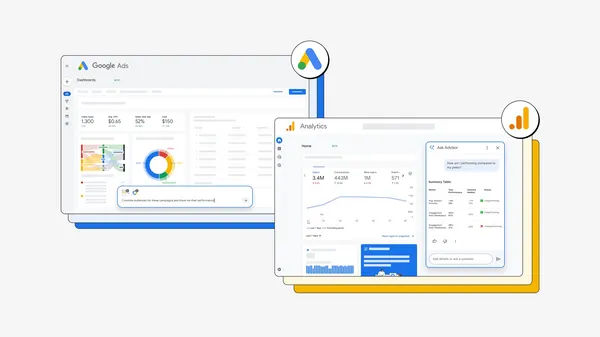
Google AIStructural ShiftAgentic Workflows
Evolve your marketing with new AI tools
Learn how new AI and agentic experiences across Google Ads and Google Analytics can simplify your marketing workflow. Why it matters: Check whether the agent can be scoped to a narrow company workflow with approvals, logs, rollback, and reusable memory. Next move: Test it against one real workflow, document the permission boundary, compare export paths, and keep the decision tied to business evidence.

Google AIStructural ShiftAgentic Workflows
5 ways to host the ultimate dinner party with Google Search
These AI features can help you craft a menu, design a tablescape, and handle other party-planning tasks. Why it matters: Check whether the agent can be scoped to a narrow company workflow with approvals, logs, rollback, and reusable memory. Next move: Test it against one real workflow, document the permission boundary, compare export paths, and keep the decision tied to business evidence.
LangChainStructural ShiftAgentic Workflows
Building a 100x Cheaper Trace Judge with Fireworks
LangChain and Fireworks fine-tuned an open model to mine perceived error signals from production traces, matching frontier model performance at a fraction of the cost. Why it matters: Check whether the agent can be scoped to a narrow company workflow with approvals, logs, rollback, and reusable memory. Next move: Test it against one real workflow, document the permission boundary, compare export paths, and keep the decision tied to business evidence.

CloudflareNew Tool SignalAgentic Workflows
Everything we launched during Agents Week
At the beginning of Agents Week, Rita shared that agents represent the next evolution of computing: not only as a new application of AI but also as a new class of software that’s shaping how people interact... Why it matters: Check whether the agent can be scoped to a narrow company workflow with approvals, logs, rollback, and reusable memory. Next move: Test it against one real workflow, document the permission boundary, compare export paths, and keep the decision tied to business evidence.

TechCrunch AINew Tool SignalAgentic Workflows
Inherent, founded by DeepMind alumni, says its AI 'teammate' just outperformed Anthropic and OpenAI at replicating research
Built by DeepMind alumni, British AI lab Inherent released Faraday, an AI agent whose ability to replicate scientific papers could be a stepping stone for innovation. Why it matters: Check whether the agent can be scoped to a narrow company workflow with approvals, logs, rollback, and reusable memory. Next move: Test it against one real workflow, document the permission boundary, compare export paths, and keep the decision tied to business evidence.
DockerAgent workflow
DockerStructural ShiftAgentic Workflows
Docker Verified Publisher Applications Are Now Self-Serve
Curating trusted content for the agentic software era While AI made it easier for organizations to keep up with the latest innovations, it also made it harder to know what to trust. When software is selected at... Why it matters: Check whether the agent can be scoped to a narrow company workflow with approvals, logs, rollback, and reusable memory. Next move: Test it against one real workflow, document the permission boundary, compare export paths, and keep the decision tied to business evidence.
Chip notes
ChipOS News Is an AI Systems DeskDesk comments and build notes.
The desk tracks AI tools, company applications, agent workflows, models, infrastructure, and vendor risk through the question of operational control.
Agentic Software Needs an Owner, Not Just a PromptAgents become operational only when permissions, memory, review, and deployment boundaries are clear.
Self-Hosting Is a Control Decision Before It Is a Server DecisionFor self-hosted AI systems, the server choice defines where memory, logs, credentials, evidence, and recovery paths actually live.
Coverage lanes
What Chip watches.
Agents, MCP systems, approval loops, memory, automation, and tool-use reliability.
Agentic Workflows
Codex, Claude Code, Gemini CLI, Cursor, Devin-style agents, MCP servers, browser-use systems, task automation, approvals, memory, and tool-use reliability.
Connected reading
ChipOS: What an owned AI control layer changesFollow this lane into doctrine and applied work.
ChipOS: The internal ownership argument behind why agent tools, coding systems, and build notes should still return value into infrastructure you control.
Age for AI: Why ChipOS existsAge for AI: Human-facing explanation of why a tool lane eventually becomes a question of memory, review boundaries, and governed execution.
Green Circular Economy: CBAM supplier data requestsGreen Circular Economy: A real-world operator lane showing why tool choice matters once evidence, auditability, and revision ownership become part of the workflow.