
Essay
The demo is no longer the first procurement surface
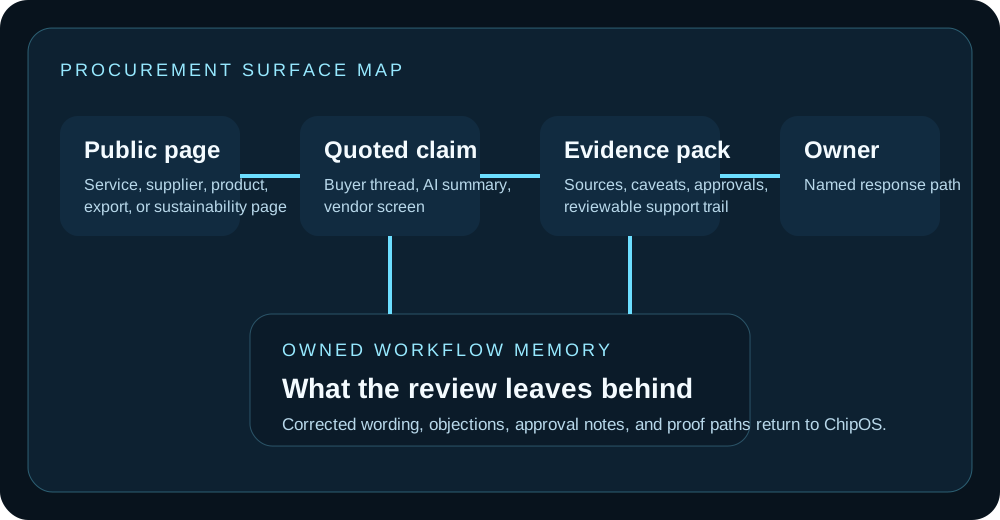
Many teams still assume procurement begins after a sales call, a pilot, or a vendor questionnaire. In practice, the first procurement step often happens much earlier. A buyer, importer, partner, or internal reviewer quotes the public page, copies it into a thread, asks an answer engine for a summary, or compares the claim against another supplier before anyone speaks to the company.
That changes the operating problem. The page is no longer only marketing copy. It becomes a procurement surface that has to survive early scrutiny from humans and AI systems at the same time. If the wording is vague, the structure is thin, or the proof path disappears behind plugins and scattered edits, the business starts the review process from a weaker position than it realizes.
Essay
What changed is not only search - it is machine-readable trust
Search used to send the visitor to the page. Now Google, ChatGPT, Perplexity, and other systems increasingly summarize the page before the visitor reaches it. Procurement teams do something similar. They scan the public wording, compare the claim against internal requirements, and decide whether the company seems clear enough to continue with.
That means structure, metadata, source alignment, and contact ownership now affect commercial trust earlier. A weak page summary can create friction before the company gets a chance to explain context live. A stronger page does not guarantee approval, but it gives the business a more accurate first reading and a more defensible starting point.
- Which page gets quoted first in buyer or vendor review?
- What claim on that page triggers the next question?
- Where does the public wording return to source files, caveats, and approvals?
- Who owns the follow-up when the page is challenged?
- What memory stays with the company after the review ends?
Essay
Ownership is the real procurement question
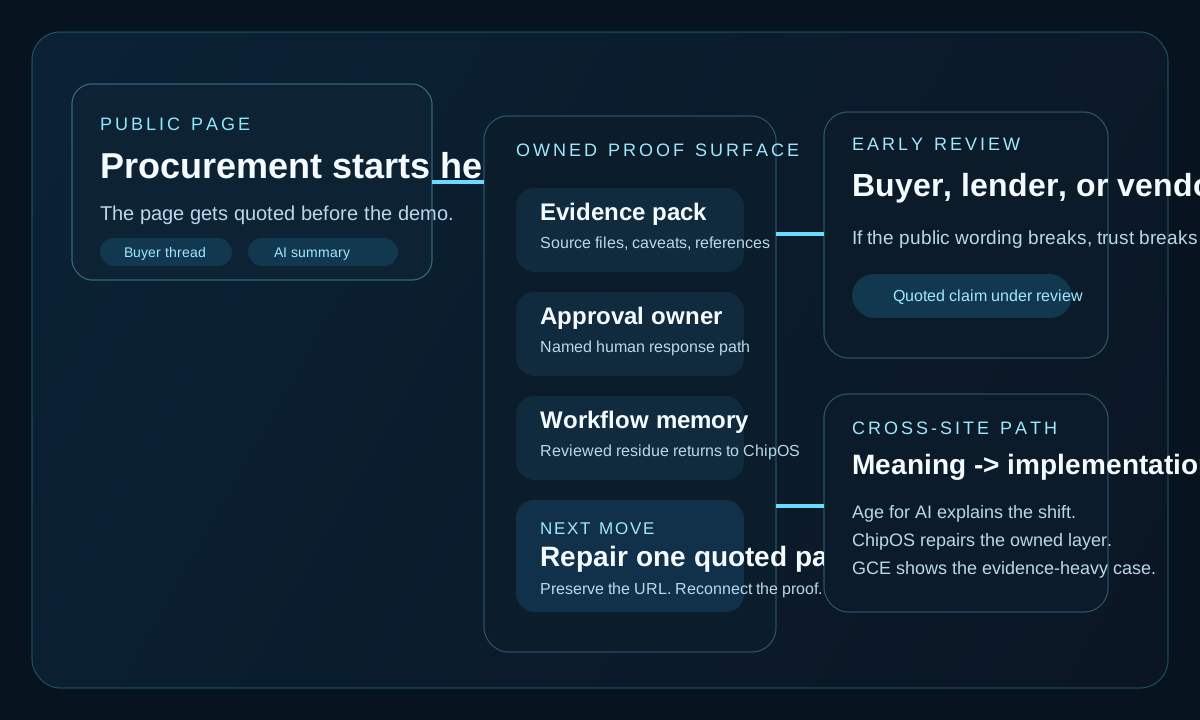
The useful ChipOS question is not whether AI speeds procurement. It is whether AI increases or reduces what the company keeps after the procurement step. If the public claim, reviewer note, source pack, and corrected wording all remain owned and reviewable, the system compounds. If they disappear into vendor consoles, chat threads, and temporary edits, the company keeps the risk but loses the learning.
This is why workflow memory matters. Procurement does not end when the reviewer leaves. The residue should improve the next page revision, the next supplier answer, the next evidence pack, and the next decision about which AI or workflow layer is safe to adopt.
Essay
Turn one page into a reviewable proof surface
The first fix is usually smaller than a full rebuild. Start with the single page that already carries procurement pressure: a service page, supplier page, export page, product page, sustainability page, or transition-finance page. Preserve the URL. Tighten the structure. Make the contact owner visible. Reconnect the wording to one support trail the team can actually recover later.
That is the point where website work becomes operating-layer work. The page should connect to one evidence pack, one caveat boundary, one approval owner, and one follow-up route. Once that path exists, the company can expand to adjacent pages without rebuilding trust from zero each time.
Essay
Proof-heavy pages need one evidence register behind the quote
The procurement pattern gets sharper when the first quoted page is not a generic product page but an export, sourcing, sustainability, or transition page. Those pages often look like marketing until a buyer, importer, lender, or supplier reviewer treats one sentence like the start of a diligence request.
That is where a simple evidence register becomes practical. The team should be able to point from the quoted page to one support pack, one approval owner, one caveat note, and one record of what changed after review. Without that register, the company may improve the copy while leaving the proof path too fragile for the next buyer or regulator question.
This is also where ChipOS and Green Circular Economy meet cleanly. The operating problem is the same across public pages, supplier data requests, and sustainability documentation: the claim only compounds if the evidence path survives after AI-assisted drafting, page refresh work, or buyer follow-up.
- Name the exact page already getting quoted in procurement or diligence threads.
- Attach one support pack that can survive buyer, lender, or importer follow-up.
- Record the owner who can approve the claim and explain unresolved caveats.
- Return the corrected wording and reviewer objections to owned workflow memory.
Essay
The next move should stay concrete
A useful first move is to choose one page, one likely reviewer, and one support pack. Ask what a buyer, partner, lender, or answer engine is most likely to quote back. Then ask whether the company can still replay the claim with sources, caveats, approvals, and an accountable human owner.
If the answer is no, procurement has exposed the ownership problem early. That is useful information. It tells the team where to repair the public surface before approving more tooling, more automation, or more traffic to the same weak page.
What to keep
The residue.
- Procurement can start before the demo when a public page gets quoted first.
- Machine-readable trust now affects websites, answer engines, and buyer review together.
- Ownership depends on whether the residue returns to one evidence pack and workflow memory layer.
- The first repair is usually one high-pressure page, not a blind full-site rebuild.
Operator view
Turn the essay into a company decision.
FAQ
Short answers for search and operators.
What does it mean that AI procurement starts on the public page?
It means the first procurement judgment often happens when buyers, answer engines, or vendor reviewers summarize or quote the public page before the company has a live conversation. The page becomes part of the review path earlier than many teams expect.
Which page should a company audit first?
Start with the page already carrying trust pressure: usually a service page, supplier page, export page, product page, or sustainability page that buyers, procurement teams, or answer systems are most likely to quote first.
Why is workflow memory part of procurement?
Because the review leaves residue. If reviewer objections, corrected wording, source packs, and approval notes do not return to an owned memory layer, the company repeats the same weak process next time.
How does this connect to sustainability or supplier workflows?
Public sustainability, supplier, CBAM, MRV, or finance-facing pages often become early diligence surfaces. They need one reviewable support pack, one owner, and one proof path behind the public wording, not only better copy.
What if the first page under review is an export or CBAM-facing page?
Treat it like a procurement surface with an evidence register behind it. The quoted page should reconnect to one support pack, one approval owner, visible caveats, and the underlying supplier or emissions records that a buyer or importer is likely to request next.
Sources
Where this connects inside ChipOS.
- ChipOS Website Audit ServiceUsed for the repair-first path when the public page already carries buyer, procurement, or answer-engine pressure.
- AI Visibility Audits Should Start With the Page Buyers QuoteUsed for identifying the first live page already acting like the commercial trust surface.
- AI Procurement Should Ask Where Workflow Memory LivesUsed for the ownership test that decides whether procurement residue stays with the company.
- Age for AI: The Semantic WebsiteUsed for the plain-language explanation of why AI discovery changed how public pages are read.
- Green Circular Economy: How to Build an ESG Evidence PackUsed for the applied evidence-pack model when public wording also needs sustainability or supplier proof behind it.
- Green Circular Economy: How to Prepare for CBAM Supplier Data RequestsUsed for the procurement-facing case where quoted export or sustainability pages need to survive importer evidence requests and supplier-document follow-up.
- AI Supplier Questionnaires Need an Owned Answer LayerUsed for the case where the public claim keeps reappearing in supplier portals, buyer questionnaires, and reusable answer packs.
- AI Audit Trails Need an Owned Evidence LayerUsed for the wider operating-layer pattern where quoted public pages need proofs, approvals, and reviewer objections to remain reconstructable later.
Across the ecosystem
Comments
Leave a signal for Chip.
Add a correction, operator note, source context, or practical consequence. Comments enter moderated review before they become public.