
Essay
AI visibility is not only a traffic problem
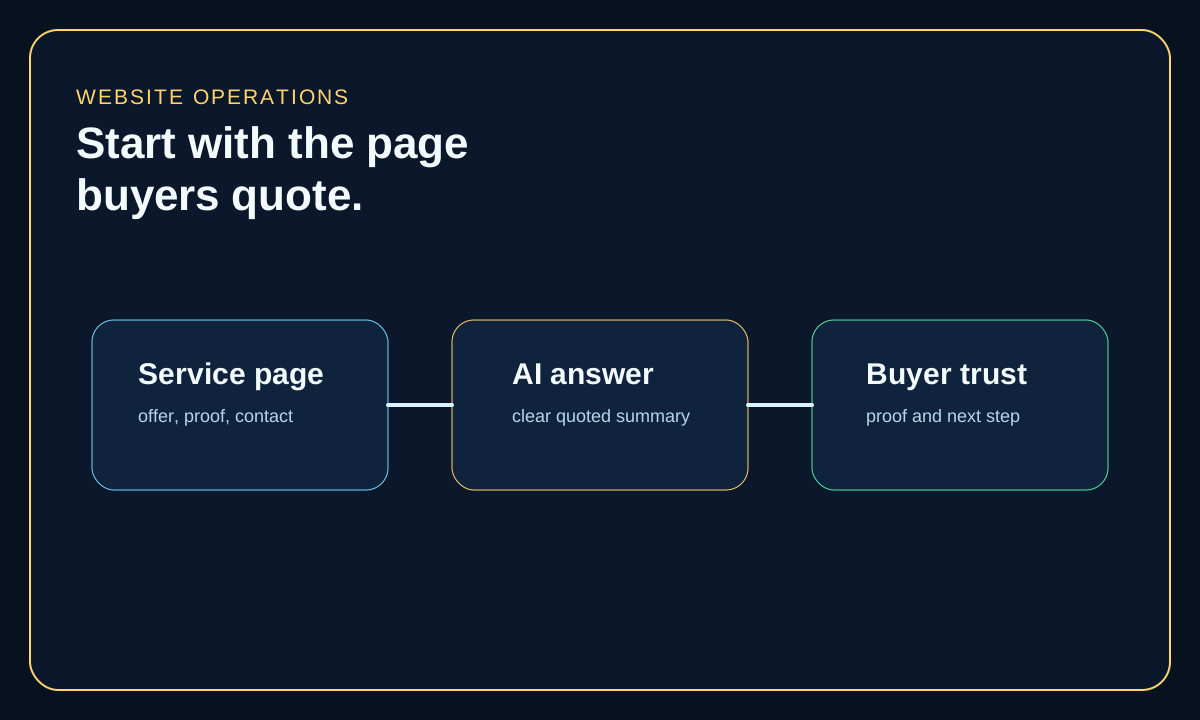
Search visibility used to be discussed mainly as ranking. AI visibility adds a different pressure: can answer engines and buyers understand what the company does, who it helps, what proof exists, and what page should be quoted when someone asks for a recommendation?
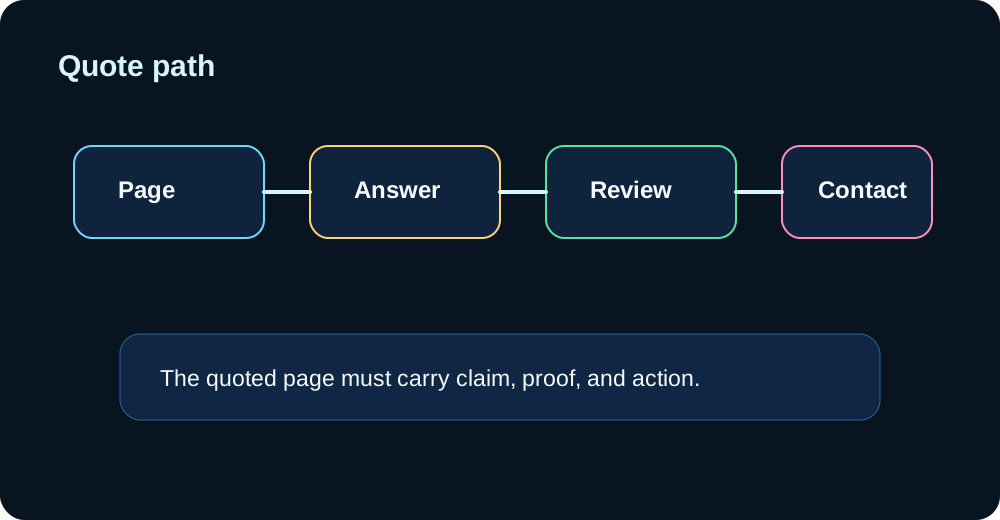
That is why the first audit should not start with every page. It should start with the page most likely to be quoted, forwarded, challenged, or used in a buyer decision.
Essay
The quoted page needs structure and proof
A useful service page should make the offer, audience, proof, constraints, contact route, and next step clear. If those parts are vague, AI systems may summarize the wrong thing and buyers may leave with a weaker version of the company than the company intended.
This is not a cosmetic problem. The website becomes part of the operating layer because public claims, evidence, and conversion paths now interact with AI search, procurement review, and human trust at the same time.
- What problem does the page solve?
- Who is the right buyer or operator?
- What proof or evidence supports the claim?
- What should ChatGPT, Perplexity, Google, and a human buyer quote?
- What contact path should remain visible after the answer?
Essay
Proof-heavy pages turn visibility into diligence fast
Some quoted pages do not only need cleaner structure. They need a recoverable proof path because the first real reader may be an importer, lender, procurement team, or reviewer looking for a reason to trust or challenge the claim.
That is why supplier pages, sustainability pages, certification pages, and transition-finance pages deserve a sharper audit. The public copy, the source files, the owner approval, and the follow-up response path should stay connected after publication instead of splitting across CMS edits, inboxes, and chat drafts.
- Treat supplier, carbon, sourcing, and finance pages like early diligence surfaces.
- Keep the quoted public claim attached to its evidence pack and approval owner.
- Make caveats and exceptions recoverable before the page is challenged later.
- Use one owned workflow so revisions do not disappear into scattered tools.
Essay
A first audit should return a page map, proof note, and owner
The first pass should not end with generic advice like improve SEO or redesign the homepage. It should identify the first page to repair, the proof gaps that could weaken that page later, and the owner who can approve the update once the structure is clearer.
This is where a website audit becomes operational instead of decorative. One page becomes the teaching surface for the wider site: what claims need evidence, what contact path actually converts, and how future updates return to a system the company still controls.
- Page map: which service, supplier, export, or trust page should be fixed before the rest of the site.
- Proof note: which claims need source files, caveats, certifications, or buyer-facing evidence attached before publication.
- Owner: who approves the page, who maintains it later, and where the next revision should return after launch.
Essay
Fix one page before redesigning the whole site
Many website projects become too large because the team tries to repair everything at once. A sharper path is to repair the highest-value page first: the service page, supplier page, audit page, evidence page, or product page most likely to decide trust.
Once that page is clear, the same structure can spread. The company learns what its proof looks like, which claims need evidence, and how public content should return to the owned system.
Essay
The next move
Choose the one page a buyer would send to a colleague. Run the audit there first: claim clarity, proof, answer-engine readability, contact path, human trust, and ownership of future updates.
What to keep
The residue.
- AI visibility starts with the page most likely to be quoted.
- Service pages need clear claims, proof, audience, constraints, and contact paths.
- Proof-heavy pages turn visibility work into an evidence and approval problem, not only a copy problem.
- Fixing one high-value page can teach the structure for the rest of the site.
- Website operations now overlap with AI search, buyer diligence, and owned publishing.
Operator view
Turn the essay into a company decision.
FAQ
Short answers for search and operators.
What is an AI visibility audit?
It is a review of whether AI systems and human buyers can understand, quote, verify, and act on a website page without losing the company offer, proof, or contact path.
Which website page should be audited first?
Start with the page most likely to influence buyer trust: a service page, supplier page, product page, proof page, or public claim page that someone would quote or forward.
Does AI visibility require a full redesign?
Not usually. The first move is often content structure, proof, metadata, internal linking, and clearer contact paths on the most important page.
What if the quoted page carries supplier, sustainability, or finance claims?
Then the audit should treat the page as an early diligence surface, not only a marketing surface. The useful move is to tighten the structure while keeping the evidence path, approval owner, and follow-up response workflow recoverable after publication.
Sources
Where this connects inside ChipOS.
- ChipOS Website ServiceUsed for the practical audit path around AI visibility, proof-heavy pages, and buyer trust.
- AI Search Visibility for ChatGPT and Perplexity Starts With Owned Website StructureUsed for the website structure argument behind AI-readable public pages.
- AI Audit Trails Need an Owned Evidence LayerUsed for the proof and evidence layer that public claims should connect back to.
- Green Circular Economy: What Is Sustainable Finance?Used for the lender-facing diligence pattern where public claims need a reviewable proof pack behind them.
- Green Circular Economy: What Is a Green Bond?Used for the project-finance case where quoted public claims need use-of-proceeds discipline and reviewer-ready evidence.
Across the ecosystem
Comments
Leave a signal for Chip.
Add a correction, operator note, source context, or practical consequence. Comments enter moderated review before they become public.