
Essay
The feature list is too shallow
AI procurement often starts with model quality, integrations, price, security answers, and a polished demo. Those questions matter, but they do not show whether the company will own the workflow after the tool is adopted.
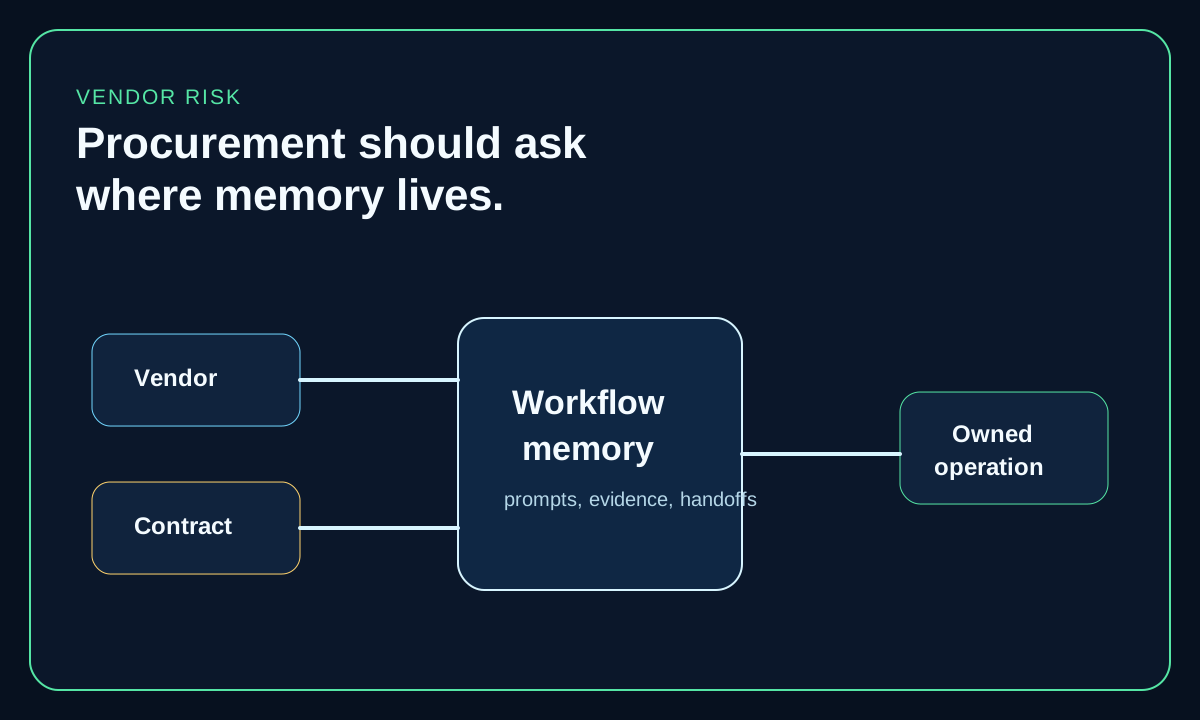
A tool can look strong while keeping the useful residue inside its own interface. If prompts, approvals, exceptions, sources, and decision history cannot return to the operator, the buyer may be purchasing speed while renting the memory that makes speed reusable.
Essay
Ask what survives the tool
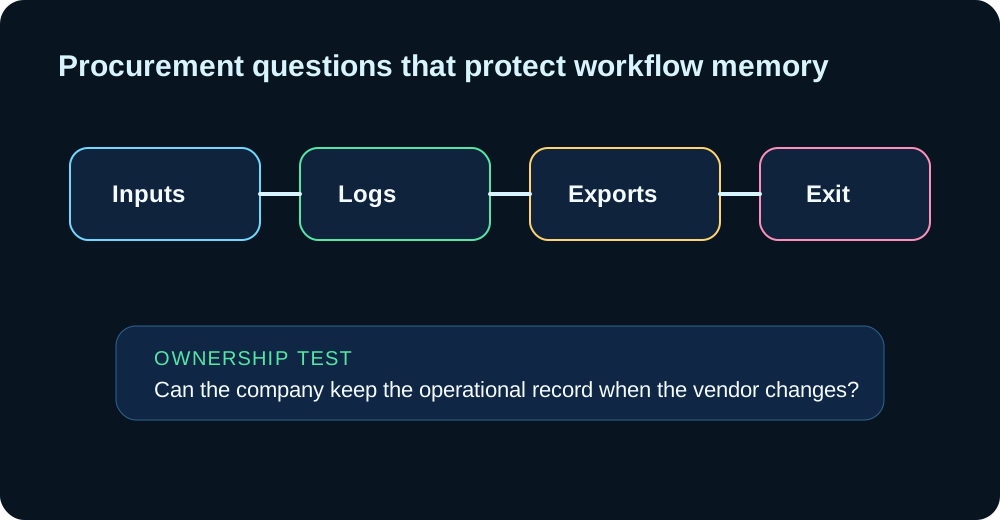
Every AI purchase should include a workflow-memory review. The buyer should know where prompts live, how sources are exported, whether approvals are visible, how mistakes are corrected, and whether the workflow can move if price, policy, or access changes.
This turns procurement into ownership design. The company can still buy the tool, but it buys with a clear boundary around what must remain portable.
- Can prompts, evaluations, and approval notes be exported or mirrored?
- Can the company reconstruct why an output was accepted or rejected?
- Can the workflow move to another provider without losing context?
- Does the tool strengthen the owned system or become the system of record?
Essay
Procurement should include an exit rehearsal
The clean test is to rehearse the exit before signing. Ask what happens if the vendor changes pricing, disables a feature, loses a key integration, or becomes unacceptable for a regulated workflow.
If the team cannot explain how work would continue, the risk is not theoretical. The workflow memory is already too close to the vendor surface.
Essay
The next move
Before approving the next AI tool, add one ownership page to the procurement note: memory location, export path, approval record, evidence path, fallback plan, and the first workflow that will prove the tool is safe to adopt.
What to keep
The residue.
- AI procurement should ask where workflow memory lives.
- A good demo is not proof that the company owns the operating residue.
- Exit rehearsal is part of responsible AI buying.
- The vendor can provide capability while the owner keeps the memory layer.
Operator view
Turn the essay into a company decision.
FAQ
Short answers for search and operators.
What should AI procurement ask beyond security and price?
Ask where workflow memory lives, how prompts and approvals can be exported, whether evidence is reconstructable, and how the workflow continues if the vendor changes.
Is vendor lock-in always bad?
No. The problem is not using a vendor. The problem is letting the vendor own the workflow memory, approval history, and evidence path that the company needs later.
What is an exit rehearsal?
It is a simple test before adoption: explain how the workflow would continue if the vendor became unavailable, too expensive, or unacceptable for a specific use case.
Sources
Where this connects inside ChipOS.
- AI Tool Sprawl Needs an Owned Workflow MapUsed for the workflow-map test that should sit inside procurement review.
- AI Pricing Volatility Makes Model Routing an Ownership DecisionUsed for the provider-risk and fallback logic behind exit rehearsal.
- The Real Risk of SaaS Automation Is Workflow CaptivityUsed for the risk that automation memory stays trapped in rented workflow surfaces.
Across the ecosystem
Comments
Leave a signal for Chip.
Add a correction, operator note, source context, or practical consequence. Comments enter moderated review before they become public.