
Essay
The price change is not the whole problem
Teams notice AI pricing volatility when a bill jumps, a plan changes, or a model gets rate-limited at the worst possible moment. That pain is real, but the deeper issue is whether the company owns the decision layer that chooses what should happen next.
If one provider becomes expensive, unstable, or politically constrained, the question is not only whether another model exists. The real question is whether the workflow can route work somewhere else without losing quality boundaries, approval rules, or operating memory.
Essay
Model routing is now part of the control layer
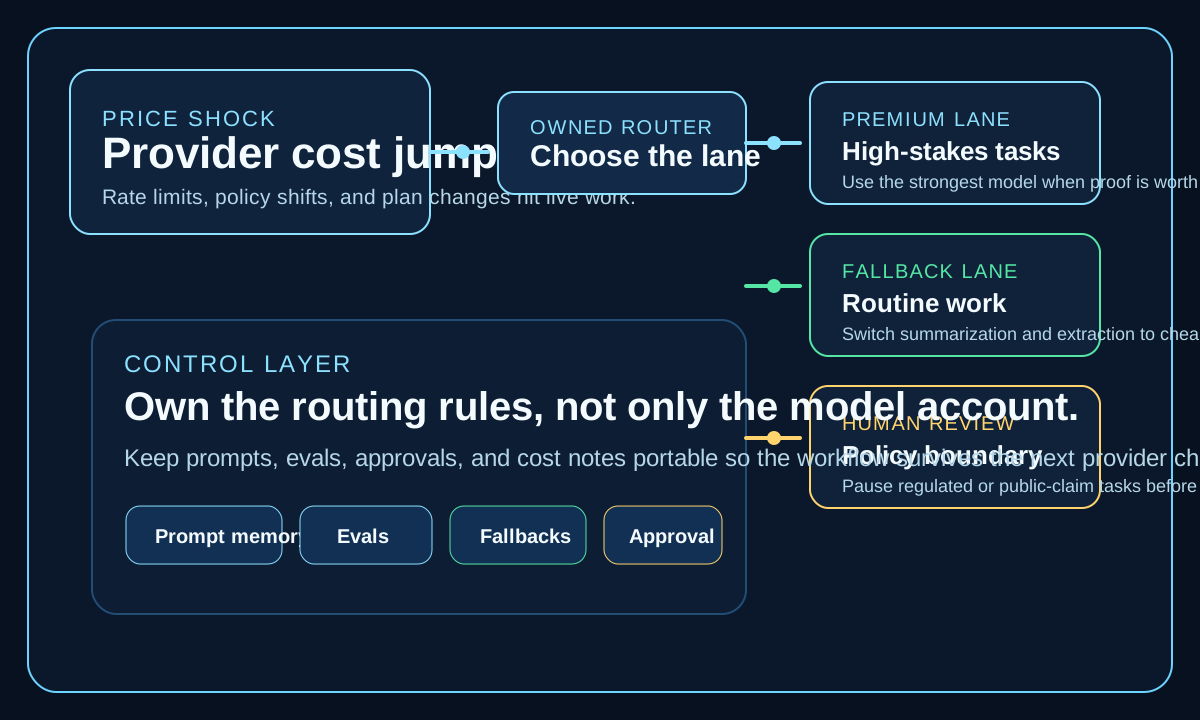
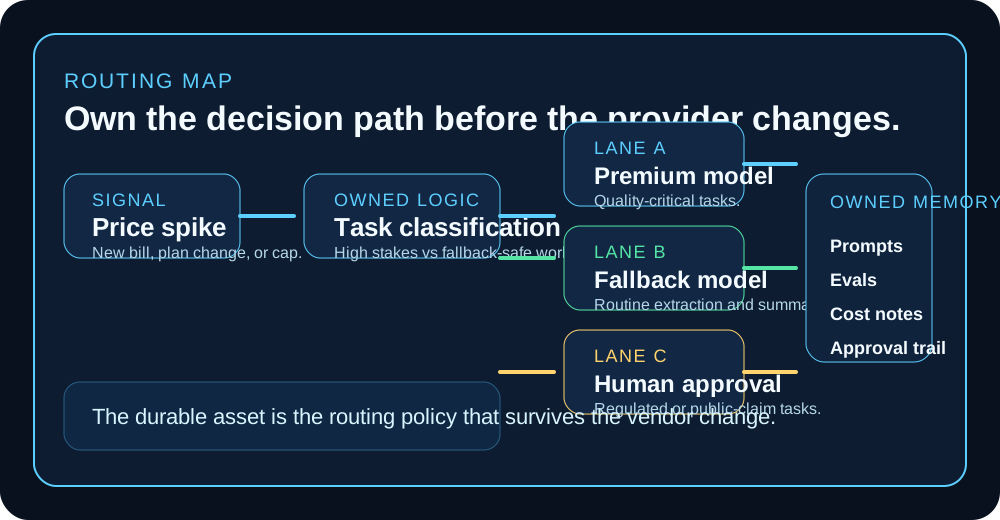
A company does not need every model to be self-hosted. It does need a controlled way to decide which tasks deserve premium models, which tasks can fall back to cheaper ones, and which steps should pause until a human approves the tradeoff.
That routing logic becomes part of the owned AI layer because it determines cost, continuity, and trust at the same time. Without it, each provider change becomes a scramble instead of a governed operating decision.
- Route high-stakes tasks to the model that meets the quality bar instead of sending everything to the most expensive default.
- Define fallback models for summarization, extraction, classification, and other lower-risk steps.
- Keep prompts, evaluations, and human approval thresholds portable across providers.
- Store cost notes, rejected paths, and outcome history in owned workflow memory so each pricing shock teaches the system something useful.
Essay
The hidden cost is broken continuity
The worst pricing shock is not the invoice. It is the silent rework that follows when teams rebuild prompts, retrain staff, lose evaluation history, or discover that a vendor-specific workflow cannot move cleanly. That is how cost volatility turns into delivery volatility.
ChipOS treats this as a vendor-risk problem because the workflow should keep moving even when one provider becomes unattractive. The owner should retain the routing map, task boundaries, evidence, and approval residue that make the next swap easier instead of starting from zero again.
Essay
Regulated and proof-heavy teams feel volatility faster
Price pressure becomes more serious when the workflow touches public claims, sustainability reporting, sourcing records, or finance-facing documents. In those environments, a provider switch can change not only cost but also explainability, audit posture, and the way evidence returns to the team.
That is why routing needs policy, not only cheaper models. The system should know which tasks can move freely, which tasks need review before switching, and where the evidence trail must remain stable regardless of vendor churn.
This becomes especially concrete in supplier-data, CBAM, and public-claim workflows. If a company changes model providers during a reporting cycle, it still needs the approval path, source files, and exception notes to survive the switch without weakening what buyers, lenders, or auditors can challenge later.
Essay
Website and disclosure workflows need routing rules too
Many companies first notice model-cost pressure in publishing and reporting work because those workflows run often and touch public trust quickly. A team may use one model for page drafts, another for evidence extraction, and a third for revision support, but the operating risk appears when nobody owns the rules for when those switches are allowed.
ChipOS treats this as a control-layer question. If a sustainability page, sourcing statement, or lead-generation service page depends on AI, the routing policy should decide which steps can fall back, which steps need human review, and where the proof and approval residue returns after each update.
Essay
The next move
Audit one live workflow this week. Mark where the expensive model is truly necessary, where a fallback would be acceptable, and which prompts, evaluations, and approval rules must stay portable before the next provider change forces the decision under pressure.
What to keep
The residue.
- AI pricing volatility matters most when the routing layer is not owned.
- Fallback rules, evaluations, and approval thresholds should survive provider changes.
- The hidden cost is workflow rework, not only the invoice.
- Regulated and proof-heavy workflows need routing policy as well as cheaper models.
Operator view
Turn the essay into a company decision.
FAQ
Short answers for search and operators.
Does every company need model routing?
Not every company needs a complex router, but any team that depends on more than one provider, cares about cost discipline, or cannot tolerate sudden access changes should define at least a simple routing and fallback policy.
Is the answer always to self-host open models?
No. Self-hosting can help in some cases, but the first ownership move is usually to keep prompts, evaluations, approval rules, and workflow memory portable so the company can choose the right mix of providers over time.
What should be portable before switching providers?
Keep prompts, task definitions, quality checks, human approval rules, fallback thresholds, and the notes explaining why one model was chosen over another. That operating residue is what makes the next switch cheaper and safer.
Why does routing policy matter for website and sustainability workflows?
Because those workflows often produce public claims or audit-facing records. If a provider change happens midstream, the company still needs the source trail, approval notes, and evidence path to remain stable after the switch.
Sources
Where this connects inside ChipOS.
- ChipOS NewsUsed for the live signal flow around model pricing, vendor risk, and operator decisions.
- What Is an Owned AI Control Layer?Used for the argument that routing, approvals, and memory belong in an owned layer above any one model vendor.
- The Real Risk of SaaS Automation Is Workflow CaptivityUsed for the portability argument when workflow intelligence risks getting trapped inside one provider or platform.
- ChipOS Website ServiceUsed for the public-site workflow where AI-readable pages, trust signals, and proof-heavy claims need a cleaner owned operating path.
Across the ecosystem
Comments
Leave a signal for Chip.
Add a correction, operator note, source context, or practical consequence. Comments enter moderated review before they become public.