
Essay
Fallback is an operating decision
Teams often add cheaper models to reduce cost or avoid dependence on one provider. That is useful, but a fallback model can create new risk when the system treats every task as downgrade-safe.
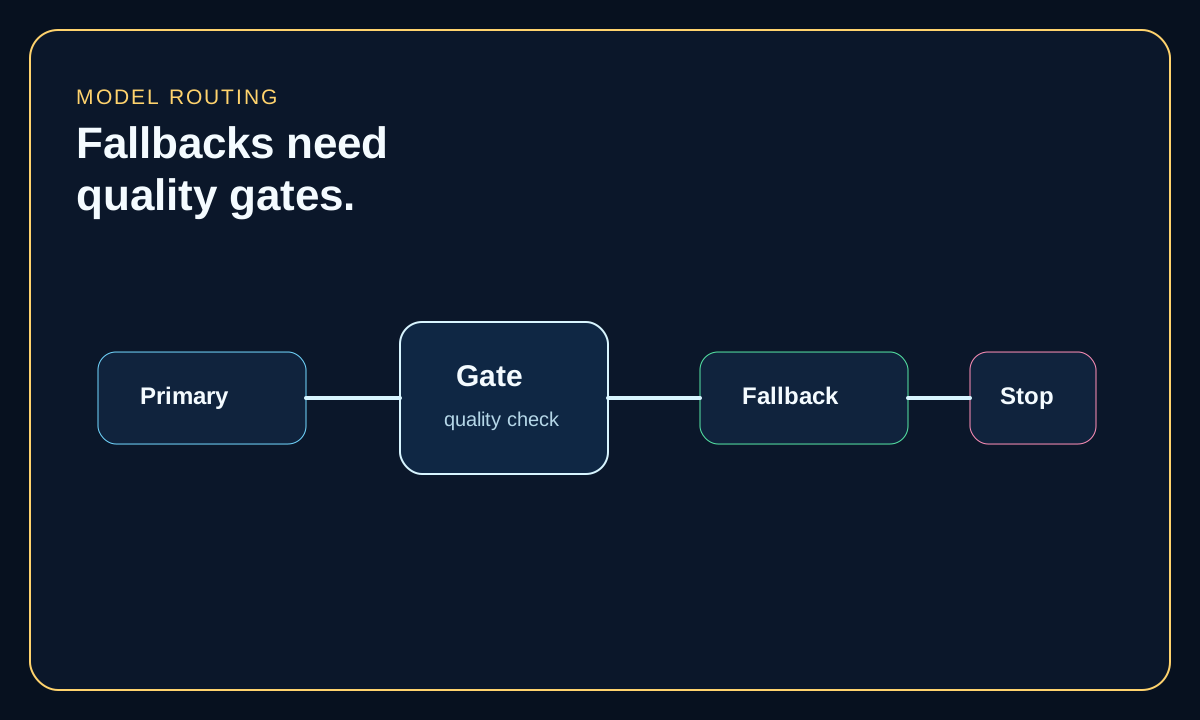
The real design question is not whether a cheaper model exists. It is which tasks can move to that model without weakening trust, accuracy, evidence, or review.
Essay
Quality gates define the downgrade boundary
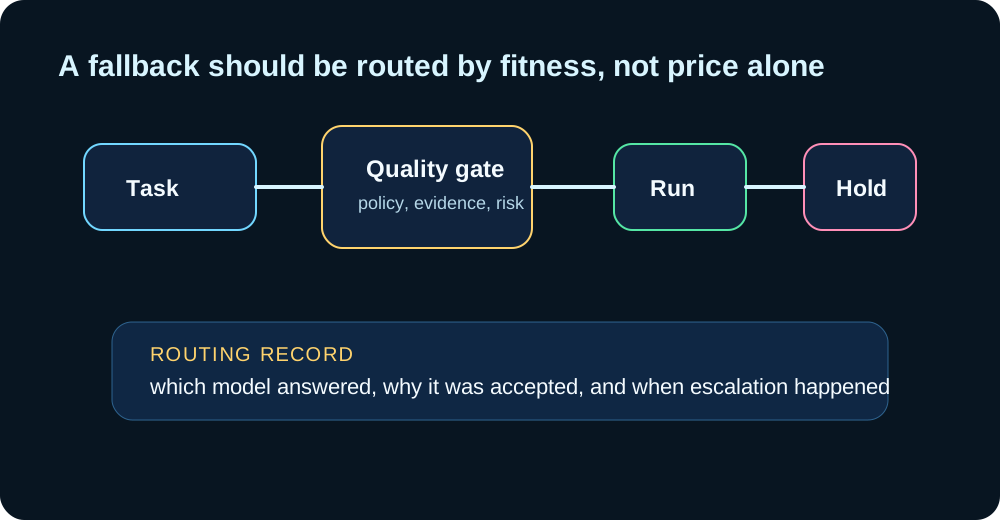
A quality gate is a rule that decides whether a task can use a fallback, needs a stronger model, or must pause for human review. The gate should be based on risk, not just cost.
Summaries, formatting, classification, and draft cleanup may be safe to route differently. Public claims, regulated records, supplier evidence, code deployment, and customer commitments usually need stronger gates.
- Fallback-safe: reversible, low-risk, easy-to-check tasks.
- Review-required: public, customer-facing, financial, legal, or supplier-evidence tasks.
- Premium-only: tasks where quality failure would create high trust, compliance, or delivery damage.
Essay
The gate should learn from failures
Fallback quality should not be a one-time guess. The system should remember where fallback worked, where it failed, what reviewers corrected, and which task classes should be rerouted next time.
That memory makes routing better. Without it, each fallback choice is just another cost shortcut.
Essay
The next move
Take one expensive workflow and mark each step as fallback-safe, review-required, or premium-only. Then store the reason for each label so routing becomes a reusable company rule.
What to keep
The residue.
- Model fallback is a control decision, not only a cost decision.
- Quality gates decide what can downgrade and what must pause.
- Fallback memory should learn from corrections and failures.
- The best routing policy protects trust while reducing unnecessary premium spend.
Operator view
Turn the essay into a company decision.
FAQ
Short answers for search and operators.
When is a fallback model safe to use?
A fallback is safer when the task is reversible, low-risk, easy to inspect, and does not create a public, legal, financial, code, or customer commitment without review.
What is a quality gate for AI routing?
It is a rule that decides whether a task can use a cheaper model, needs a stronger model, or must pause for human review before moving forward.
Should fallback choices be stored in memory?
Yes. Store where fallback worked, where reviewers corrected it, and why certain tasks require a stronger path. That turns routing into an owned operating rule.
Sources
Where this connects inside ChipOS.
- AI Pricing Volatility Makes Model Routing an Ownership DecisionUsed for the model-routing and vendor-risk frame.
- AI Regulation Becomes Product WorkUsed for the control-gate logic around public or regulated movement.
- AI Audit Trails Need an Owned Evidence LayerUsed for the correction and evidence memory that should follow fallback decisions.
Across the ecosystem
Comments
Leave a signal for Chip.
Add a correction, operator note, source context, or practical consequence. Comments enter moderated review before they become public.