
Essay
Regulation becomes real at the control point
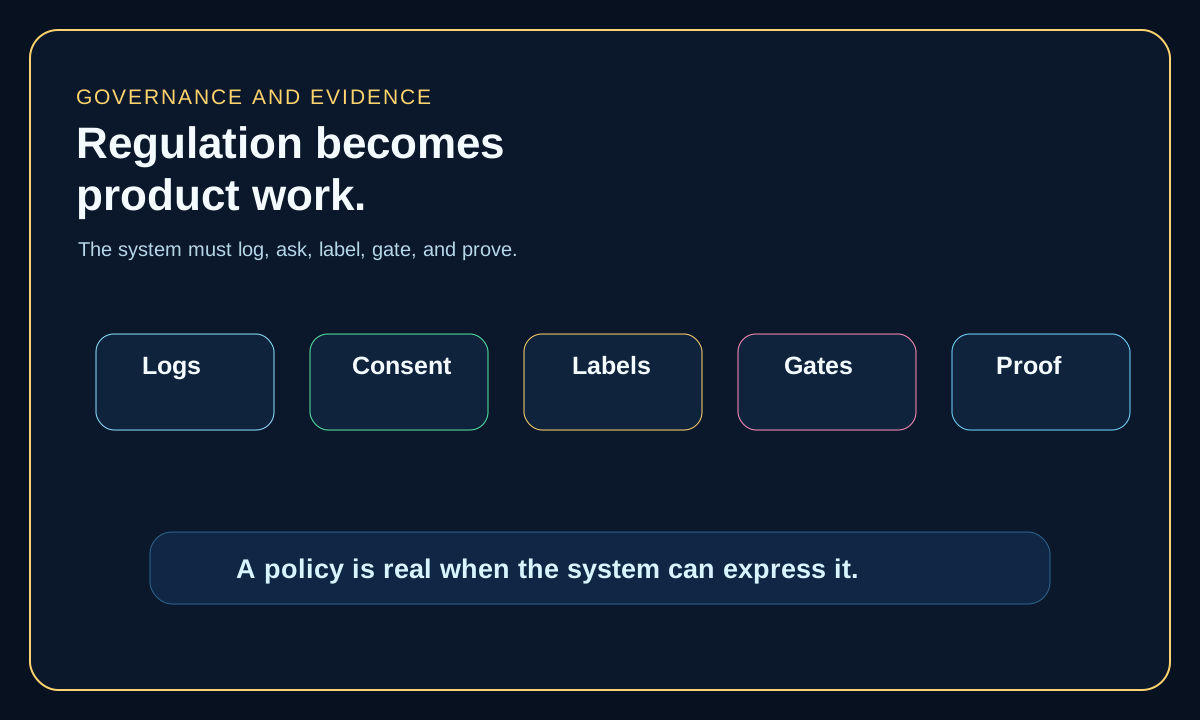
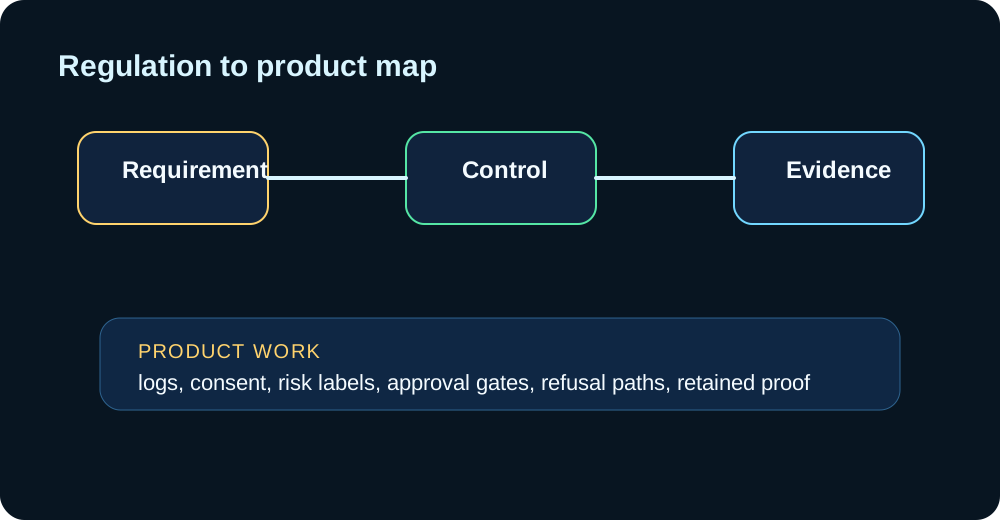
A company can read AI regulation as legal language, but the work becomes real when it changes the product. Someone has to decide what gets logged, when consent is needed, which risk label applies, who can approve deployment, and what evidence survives after the system acts.
That is why regulation belongs inside the operating layer, not only inside a policy PDF. If the product cannot express the rule, the company will struggle to prove that the rule actually shaped behavior.
Essay
The useful question is what must change in the system
Not every regulatory signal requires a rebuild. Some require a label, a record, a permission boundary, a data-retention rule, a human review step, or a refusal path. The operator needs a way to translate legal pressure into product controls without turning every update into panic.
ChipOS treats this as a routing and evidence problem. The system should know which workflows are low-risk, which need review, which should stop, and which records must return to owned memory before deployment is complete.
- Logs: what happened, when, under which identity, and with which source.
- Consent: who allowed the action and what boundary they accepted.
- Risk labels: what kind of workflow this is and why it matters.
- Deployment gates: what must be reviewed before the change reaches users, customers, or public pages.
- Evidence return: what proof survives after the model, tool, or agent finishes.
Essay
Public and proof-heavy workflows need this first
The strongest early use case is not abstract compliance. It is any workflow where a public claim, customer promise, supplier record, finance document, or code deployment could be challenged later.
Those workflows need logs and consent because someone may ask why a statement changed, where a source came from, who approved a model output, or why an agent was allowed to move from draft into action. If the answer only lives in a chat thread, the company has not built a durable control surface.
Essay
Regulation should improve ownership
The wrong response to regulation is to bolt compliance language onto an otherwise rented workflow. The better response is to let the requirement strengthen the owned layer: better logs, clearer approvals, more portable evidence, and stronger refusal points.
When regulation is translated into product controls, the company gains more than compliance posture. It gains a system that can explain itself under pressure.
What to keep
The residue.
- AI regulation becomes product work when it changes system behavior.
- Logs, consent, labels, gates, and evidence return are operating controls, not decorations.
- Public claims and proof-heavy workflows should get these controls first.
- Good regulation translation can strengthen ownership instead of only adding compliance overhead.
Operator view
Turn the essay into a company decision.
FAQ
Short answers for search and operators.
How should operators turn AI regulation into product work?
Translate each requirement into a concrete control: what to log, when to ask consent, how to label risk, where to add review, when to refuse, and what evidence to retain.
Does every AI workflow need heavy compliance controls?
No. Controls should match risk. Low-risk reversible work can stay light, while public, financial, regulated, customer-facing, and deployment workflows need clearer logs, approvals, and evidence.
Why does ChipOS connect regulation with ownership?
Because the company should keep the logs, decisions, approval notes, and evidence needed to explain how an AI workflow moved. If that proof is trapped elsewhere, compliance and ownership both weaken.
Sources
Where this connects inside ChipOS.
- ChipOS GovernanceUsed for the public governance frame around controlled AI movement and evidence.
- AI Audit Trails Need an Owned Evidence LayerUsed for the evidence-layer argument behind logs, approvals, sources, and review notes.
- ChipOS News: Security and GovernanceUsed for the current signal lane where regulation, security, and deployment control affect owned AI systems.
Across the ecosystem
Comments
Leave a signal for Chip.
Add a correction, operator note, source context, or practical consequence. Comments enter moderated review before they become public.