
Essay
The questionnaire is not the real workflow
Many teams treat supplier questionnaires as one-off admin work. A portal arrives, someone copies wording from the website, another person checks an old spreadsheet, and the answer gets submitted before the deadline. That is not a stable workflow. It is a repeated trust test with no durable memory behind it.
The operational problem appears when the same sentence has to survive in multiple places at once: the public service page, the buyer thread, the supplier portal, the ESG pack, or the lender follow-up note. If each answer is rebuilt manually, the business may sound consistent while losing the source path, caveat boundary, and owner approval that make the answer defensible later.
Essay
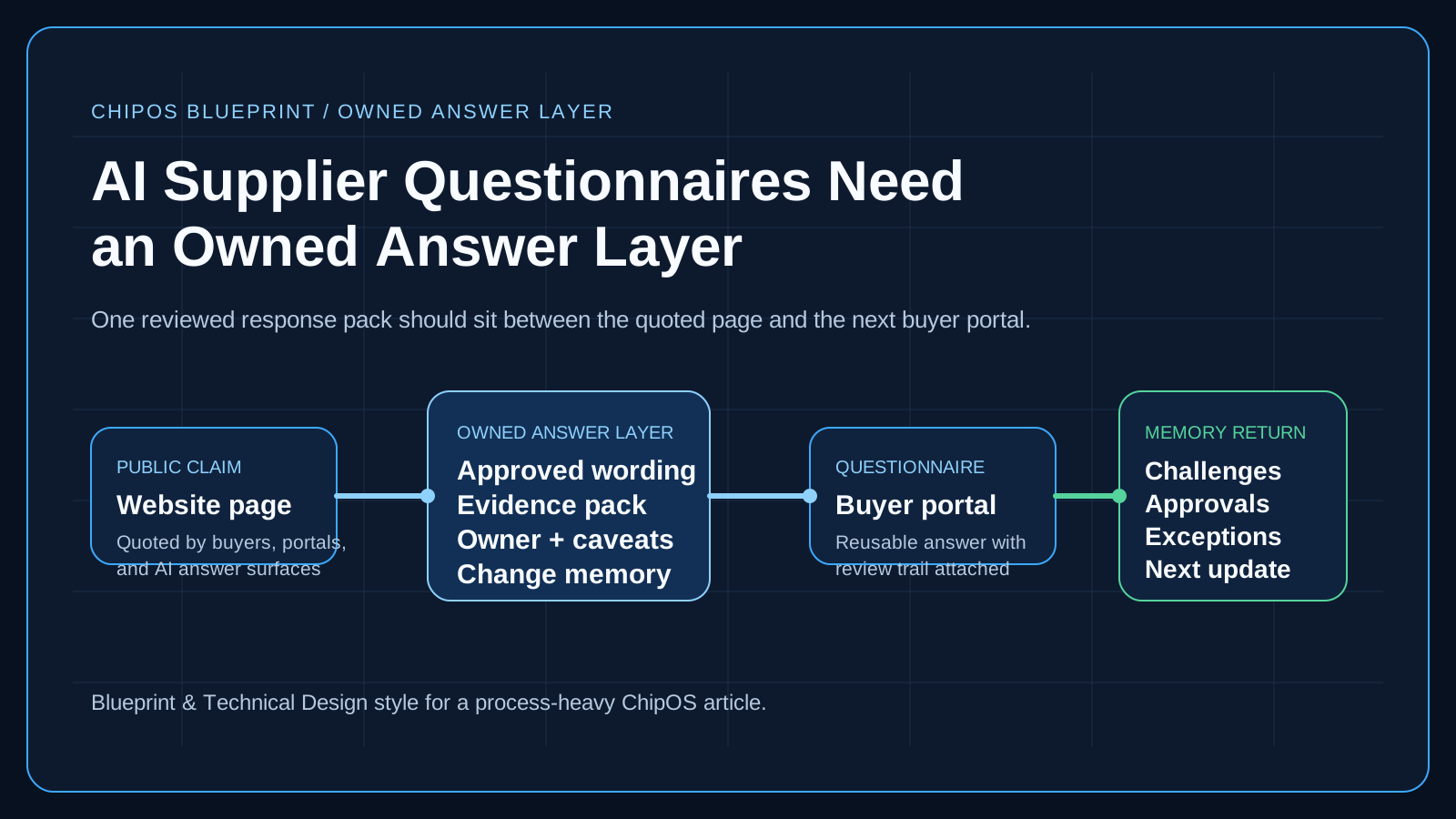
The owned answer layer sits between the claim and the portal
ChipOS treats repeated questionnaire work as an owned answer-layer problem. The company should not rely on one portal, one spreadsheet, or one AI draft to remember why an answer was acceptable last quarter.
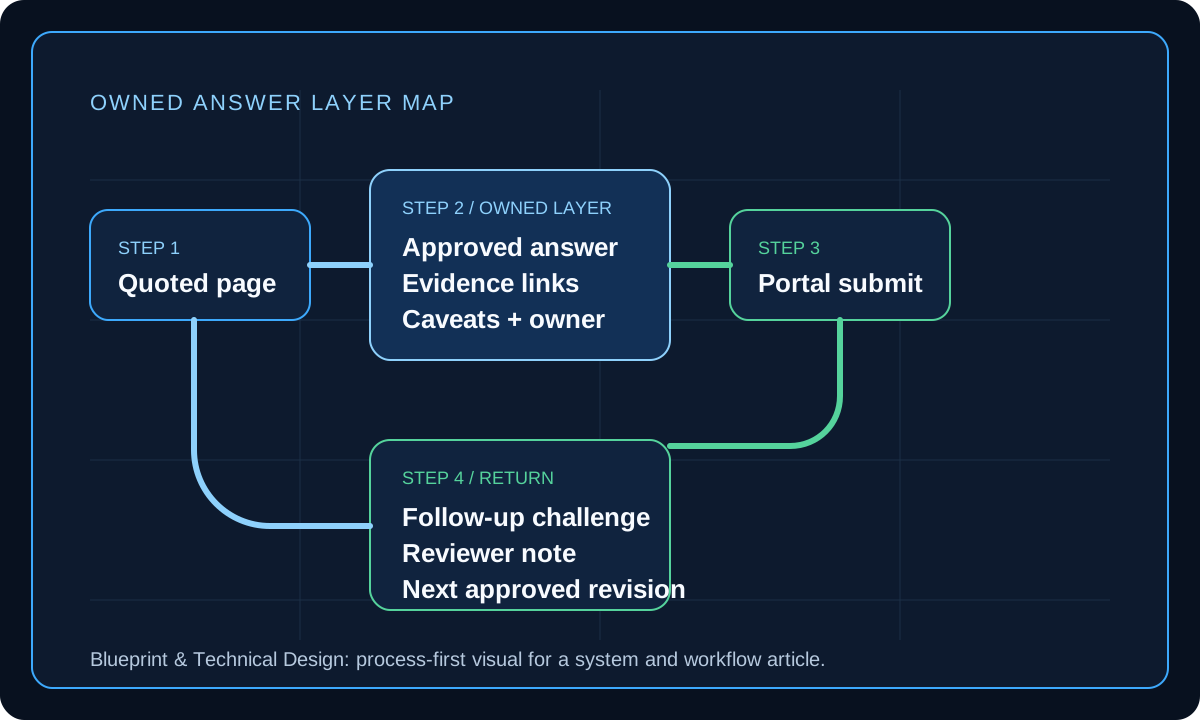
The useful layer stores the approved wording, the supporting source pack, the caveats that must stay attached, the human who can still defend the answer, and the reason the answer changed. That gives the company a reusable response surface without letting repeated portal work become another hidden memory leak.
- What public claim or internal statement is the answer based on?
- Which source files, data points, or approvals support that answer?
- What caveat or boundary must travel with the wording?
- Who can still defend the answer when a buyer asks a follow-up question?
- What changed since the last submission and why?
Essay
Public pages usually create the answer debt first
A repeated supplier answer often starts with a weak page, not a weak portal. The website makes a broad claim, the claim gets copied into a questionnaire, the questionnaire gets tightened by a buyer, and then the team discovers that the source, scope, and owner were never defined clearly enough to survive external review.
That is why website operations belong inside the questionnaire discussion. If the public wording is already being quoted, the right move is not only to draft faster. The right move is to repair the quoted page, connect it to an evidence room, and store one reviewed answer pack behind the claim before the next portal cycle begins.
Essay
Fix the quoted page before you automate the reuse
A company should pause before automating questionnaire drafting when the same sentence is already leaking across the website, buyer portals, lender questions, and supplier follow-up. Faster reuse only scales the trust problem if the quoted page still has weak metadata, unclear caveats, or no named owner behind the claim.
The safer move is to treat the repeated answer as a website-audit trigger. Repair the page buyers already quote, connect it to one evidence pack, decide what AI may draft versus what a human must still approve, and only then expand reuse across more questionnaires and more workflows.
Essay
A reviewed answer pack should outlive the portal
Portals change. Buyers change. Submission formats change. The durable asset is the reviewed answer pack behind the answer. That pack should keep the approved wording, the evidence links, the latest caveat notes, the answer owner, and the memory of what failed or got challenged last time.
This is where AI can help without taking control away from the operator. AI can draft, compare changes, pull sources, flag missing evidence, and suggest reuse. The owned layer still decides what is safe to send, what still needs review, and what should update the public page before the answer is reused again.
Essay
The next move is to choose one repeated questionnaire family
Do not start by trying to automate every supplier, ESG, or procurement questionnaire at once. Start with one repeated family of answers that already shows up across public pages, buyer diligence, and recurring portal requests.
Build one reviewed answer layer around that family. Once the wording, evidence path, owner approval, and change history are stable, the workflow becomes safer to scale across more questionnaires and more AI-assisted drafting.
What to keep
The residue.
- Repeated supplier questionnaires are an ownership workflow, not only an admin task.
- One reviewed answer layer should sit between the public claim and the portal submission.
- If buyers already quote the page, the website itself should be repaired before wider automation expands the same answer.
- Website structure, evidence handling, and questionnaire reuse usually fail together.
- AI drafting is useful only when the business keeps the approved wording, caveats, and memory behind it.
Operator view
Turn the essay into a company decision.
FAQ
Short answers for search and operators.
What is an owned answer layer for supplier questionnaires?
It is the governed response layer that stores approved wording, supporting evidence, caveats, reviewer notes, ownership, and change history so repeated questionnaire answers can be reused safely.
Why is the public website part of the questionnaire workflow?
Because buyers, portals, and internal reviewers often start from public wording. If the page claim is weak or underspecified, the same weakness gets copied into the questionnaire answer.
Can AI help with supplier questionnaires without increasing risk?
Yes, if AI drafts against approved sources and a human still controls final wording, caveats, and evidence. The problem is not AI drafting. The problem is losing the owned review layer behind the draft.
When should a company repair the website page before automating answers?
When buyers, portals, or lenders already keep quoting the same public sentence. If the page claim still has weak metadata, unclear caveats, or no named owner behind it, faster reuse only scales the trust problem.
Which questionnaire workflow should a company fix first?
Start with the answer family that repeats most often across buyer portals, supplier requests, ESG evidence packs, or lender follow-up and already depends on one public claim.
Sources
Where this connects inside ChipOS.
- ChipOS Website Audit ServiceUsed for the quoted-page repair path when supplier answers begin from public wording.
- AI Procurement Should Ask Where Workflow Memory LivesUsed for the ownership test around prompts, approvals, and reusable answer residue.
- Website Claims Need an Evidence Room Before They Need More CopyUsed for the argument that repeated answers need a proof trail behind the claim, not only better wording.
- Green Circular Economy: How to Answer Sustainability Supplier QuestionnairesUsed for the applied supplier-questionnaire workflow on the sustainability side.
- Green Circular Economy: How to Build an ESG Evidence PackUsed for the evidence-pack model that should sit behind repeated supplier answers.
- Age for AI: The Semantic WebsiteUsed for the human-facing explanation of why public page structure now affects machine and buyer trust.
- Age for AI: Human Agency in AutomationUsed for the argument that AI drafting should not remove visible human judgment, refusal, and approval from the workflow.
Across the ecosystem
Comments
Leave a signal for Chip.
Add a correction, operator note, source context, or practical consequence. Comments enter moderated review before they become public.