
Essay
The server is not the point
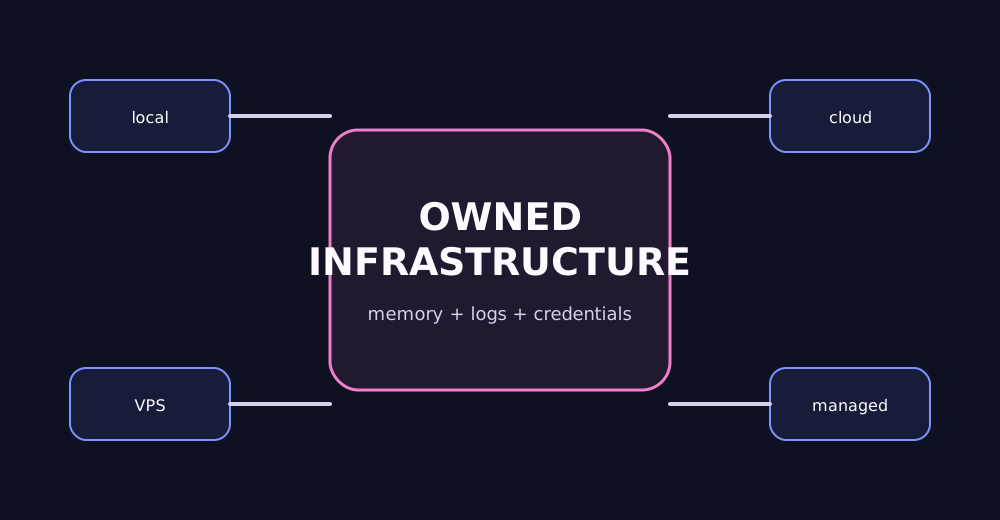
People often talk about self-hosting as if the question is whether a person enjoys servers. For AI operations, that is too small. The real question is where the system's memory, logs, credentials, backups, and recovery paths should live.
When AI tools begin to act across files, accounts, repositories, and customer systems, infrastructure becomes part of the trust boundary.
Essay
Start from the workflow
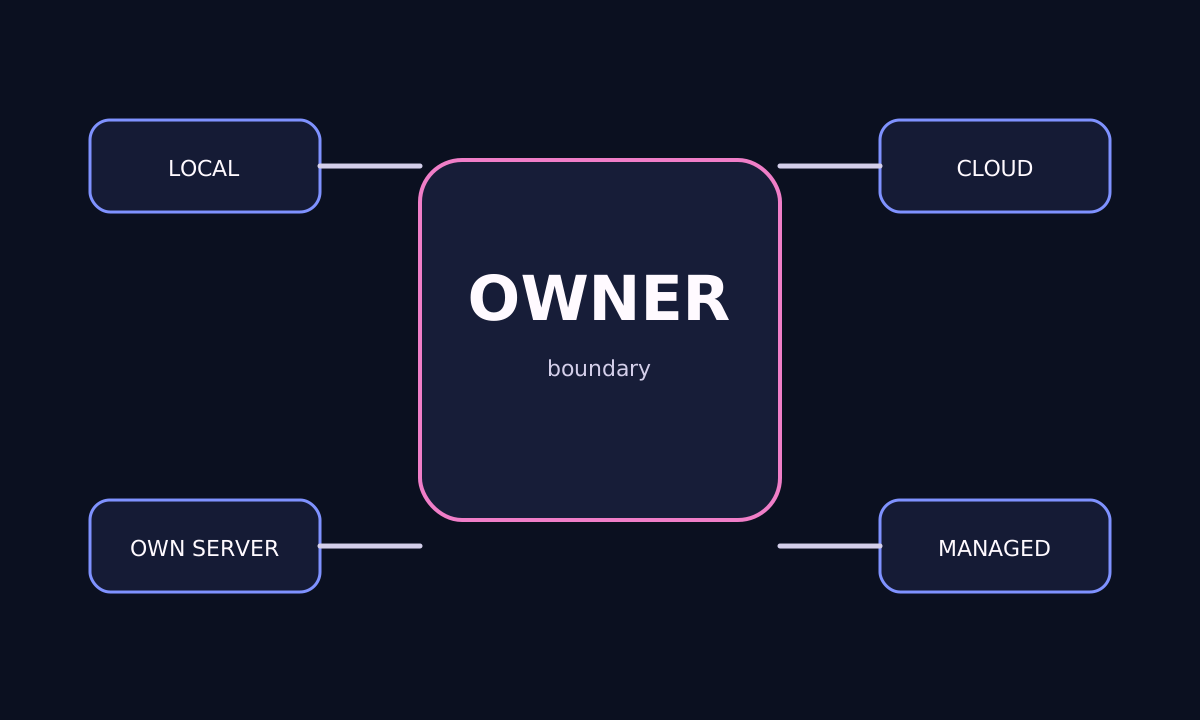
The right hosting path depends on the work. A local preview is good for learning. A managed setup is good for speed. An own-server path is good when the owner needs stronger control over data boundaries, uptime, and recovery.
ChipOS should make that decision explicit instead of pretending every company has the same deployment shape.
- Local when the goal is preview and learning.
- Managed when the owner needs help operating the system.
- Own server when audit, data, recovery, or independence matter.
- External compute when heavy work needs outside capacity.
Essay
What self-hosting must prove
A self-hosted system is not automatically safer. It still needs updates, backups, access control, observability, and clear recovery. Ownership only helps when the owner can operate the boundary responsibly.
The useful version is practical: fewer mysteries, clearer logs, known backups, controlled credentials, and the ability to move if a provider changes.
Essay
Managed setup can still protect the owned boundary
Many teams do not need to operate every server detail themselves on day one. They do need a deployment path where backups, credentials, recovery notes, and workflow memory remain visible instead of disappearing into somebody else's opaque platform routine.
That makes managed setup a practical ownership path when the company wants speed without surrendering the boundary. The useful question is whether the operator can still inspect what runs where, what recovers first, and which parts of the workflow must return to company control if the setup changes later.
- Decide where backups, logs, and recovery notes live before the first deployment.
- Keep secret rotation, update policy, and health checks visible to the owner.
- Make sure the workflow can move from managed setup to an own-server path without losing memory or operating context.
Essay
A live website is often the first ownership test
Many small teams do not feel the self-hosting question when they are experimenting locally. They feel it when a public page, service claim, buyer contact route, or proof-heavy update has to go live with a clear approval path and a recoverable source trail behind it.
That is why self-hosting should be read together with publishing control. If the website update path depends on scattered chat notes, weak backups, or a managed surface the owner cannot inspect later, the problem is not only where the server runs. The problem is that the workflow boundary is still vague at the exact point where trust starts costing money.
- Keep the page change, approval owner, and supporting files connected before publication.
- Make sure backups and rollback are clear enough that a claim can be corrected without guesswork.
- Use managed setup only if the owner can still inspect the update path, logs, and recovery notes afterward.
- Treat the website workflow as the first real test before extending the same boundary to broader AI operations.
Essay
The next move
Before choosing a server, name what must stay inside the boundary. If the answer includes workflow memory, logs, credentials, regulated data, or deployment authority, then hosting is an operating decision, not a technical preference.
What to keep
The residue.
- Self-hosting is about the operating boundary, not server enthusiasm.
- The right deployment path depends on memory, credentials, logs, and recovery needs.
- Owned infrastructure still needs disciplined operations.
Operator view
Turn the essay into a company decision.
FAQ
Short answers for search and operators.
Does ChipOS require self-hosting?
ChipOS is built around ownership, but the first environment can be local, managed, cloud, or own server. The important decision is what data and workflow memory must stay under the owner's control.
Is a VPS enough for an owned AI workspace?
A VPS can be enough for many early workflows if it has sufficient CPU, RAM, storage, backups, security updates, and operational monitoring. Heavy model compute can still use outside services.
What should be audited before launch?
Audit access, secrets, backups, update policy, logs, data residency, recovery steps, and which external services can affect the system.
When is managed setup better than running everything alone?
Managed setup is often the better starting path when the team needs an owned boundary quickly but does not yet have stable operational habits for backups, updates, health checks, and recovery. The ownership test is whether the company can still inspect and later move the workflow without losing memory, logs, or control.
Why does this self-hosting decision show up first on a website or service page?
Because public pages combine trust, change history, approvals, contact flow, and later buyer scrutiny in one visible surface. If the team cannot explain how the page changed, recover the supporting files, or trace who cleared the claim, the hosting problem is already operational even before broader automation is added.
Sources
Where this connects inside ChipOS.
- ChipOS ArchitectureUsed for the local, cloud, own-server, and managed setup distinction.
- ChipOS InfrastructureUsed for the practical infrastructure boundary around backups, observability, and deployment recovery.
- ChipOS GovernanceUsed for the approval, responsibility, and challenge boundary that turns hosting into an operating decision instead of a server preference.
- ChipOS Website ServiceUsed for the live publishing workflow where claim updates, contact routes, rollback, and proof handling expose whether the owner really controls the boundary.
- ChipOS Use CasesUsed for the connect-before-rebuild operating model.
Across the ecosystem
Comments
Leave a signal for Chip.
Add a correction, operator note, source context, or practical consequence. Comments enter moderated review before they become public.