
Essay
A server is not the strategy
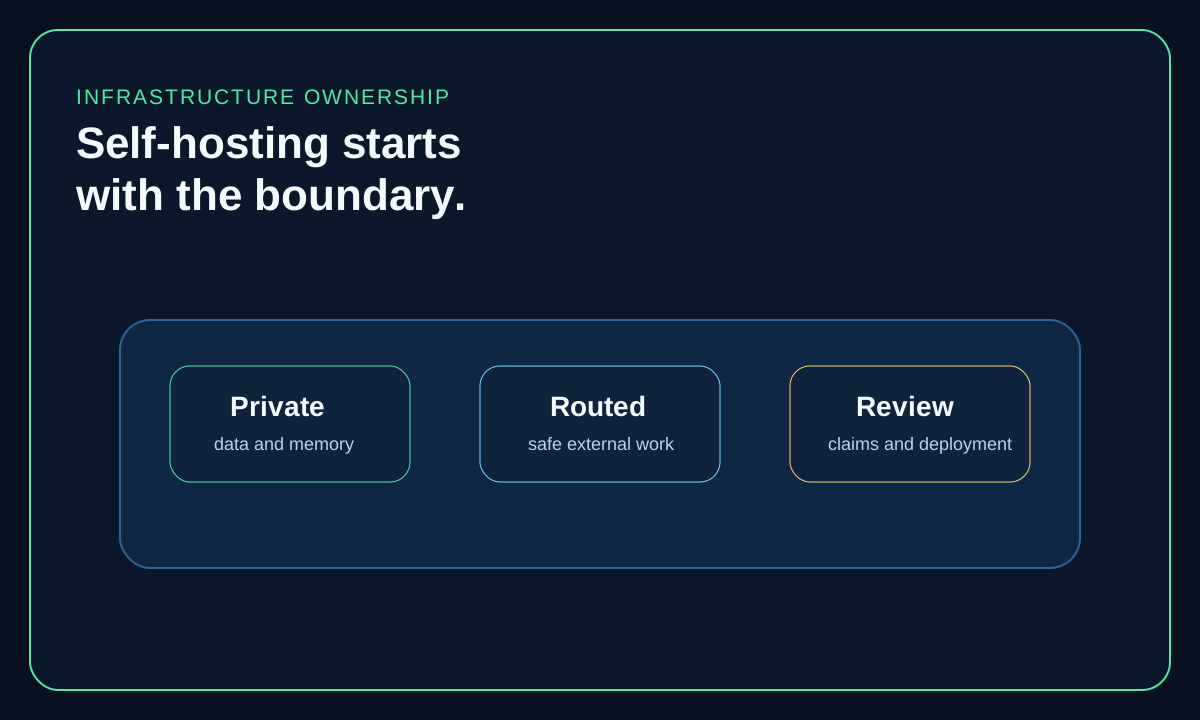
Buying a server or choosing a cloud region can be useful, but it is not the first strategic decision. The first decision is the boundary: what data, memory, and operating context should remain under the owner's control even when outside models and tools are used.
Without that boundary, self-hosting becomes a server hobby. With it, infrastructure becomes a way to protect the parts of the workflow that create long-term value.
Essay
Draw three lanes before deploying
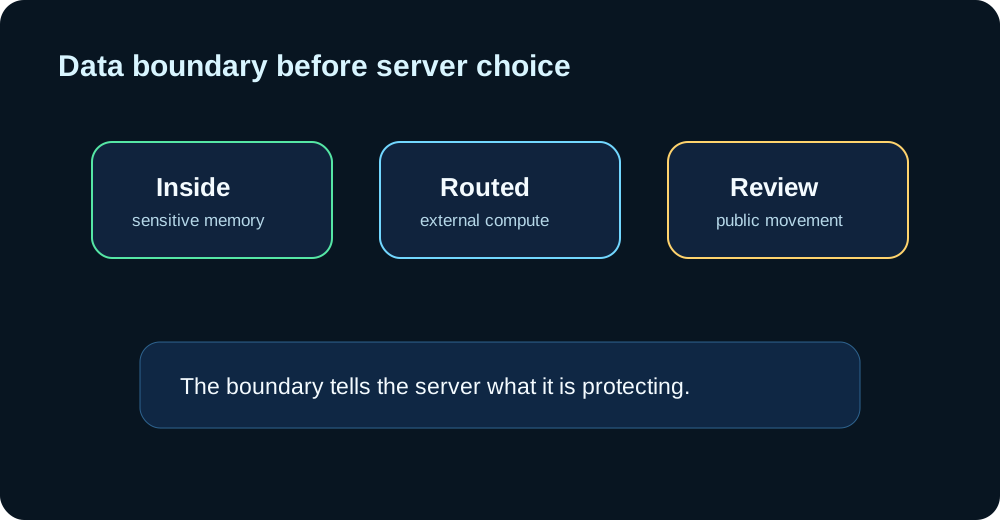
The cleanest starting point is to split the workflow into three lanes. Some information should stay inside owned infrastructure. Some tasks can safely use external AI services. Some outputs can leave only after review, redaction, or approval.
This makes self-hosting practical. The company does not need to isolate everything on day one. It needs to know which parts of the system are allowed to move and which parts must stay anchored.
- Private lane: customer context, internal files, credentials, approval history, and sensitive workflow memory.
- Routed lane: low-risk summarization, formatting, search, translation, or extraction that can use external compute.
- Review lane: public claims, regulated records, contracts, code deployment, and finance-facing evidence.
Essay
The boundary should be visible to operators
A data boundary is not useful if only the infrastructure person understands it. Operators need visible rules: what can be pasted, what needs redaction, what must be reviewed, and what memory must return after the tool finishes.
ChipOS should make those rules part of the operating surface. The owner should not have to rely on private tribal knowledge to keep sensitive work inside the right boundary.
Essay
The next move
Choose one workflow and mark its private, routed, and review lanes. Then decide which lane needs owned infrastructure first. That decision will usually be more useful than debating servers before the boundary is clear.
What to keep
The residue.
- Self-hosting starts with a data boundary, not a server choice.
- Private, routed, and review lanes make infrastructure decisions easier.
- Operators need visible rules for what can move and what must stay anchored.
- Owned infrastructure should protect the workflow memory that creates durable value.
Operator view
Turn the essay into a company decision.
FAQ
Short answers for search and operators.
Does self-hosted AI mean every model must run locally?
No. A practical self-hosted strategy can still use outside AI services for safe tasks. The key is owning the boundary, memory, approvals, and sensitive data paths.
What should stay inside owned infrastructure first?
Start with sensitive customer context, internal files, credentials, source evidence, approval history, and reusable workflow memory that would hurt the company if it became dependent on another platform.
Why is the data boundary more important than the server?
Because the server only matters after the company knows what it is protecting. The boundary explains which data and decisions must stay owned and which tasks can safely route outward.
Sources
Where this connects inside ChipOS.
- ChipOS InfrastructureUsed for the owned infrastructure model behind private lanes, routing, and operator control.
- Self-Hosting Is a Workflow Decision, Not a Server HobbyUsed for the principle that self-hosting should begin with workflow ownership.
- AI Pricing Volatility Makes Model Routing an Ownership DecisionUsed for the routing logic that separates premium, fallback, private, and review lanes.
Across the ecosystem
Comments
Leave a signal for Chip.
Add a correction, operator note, source context, or practical consequence. Comments enter moderated review before they become public.