
Essay
Open is not automatically operational
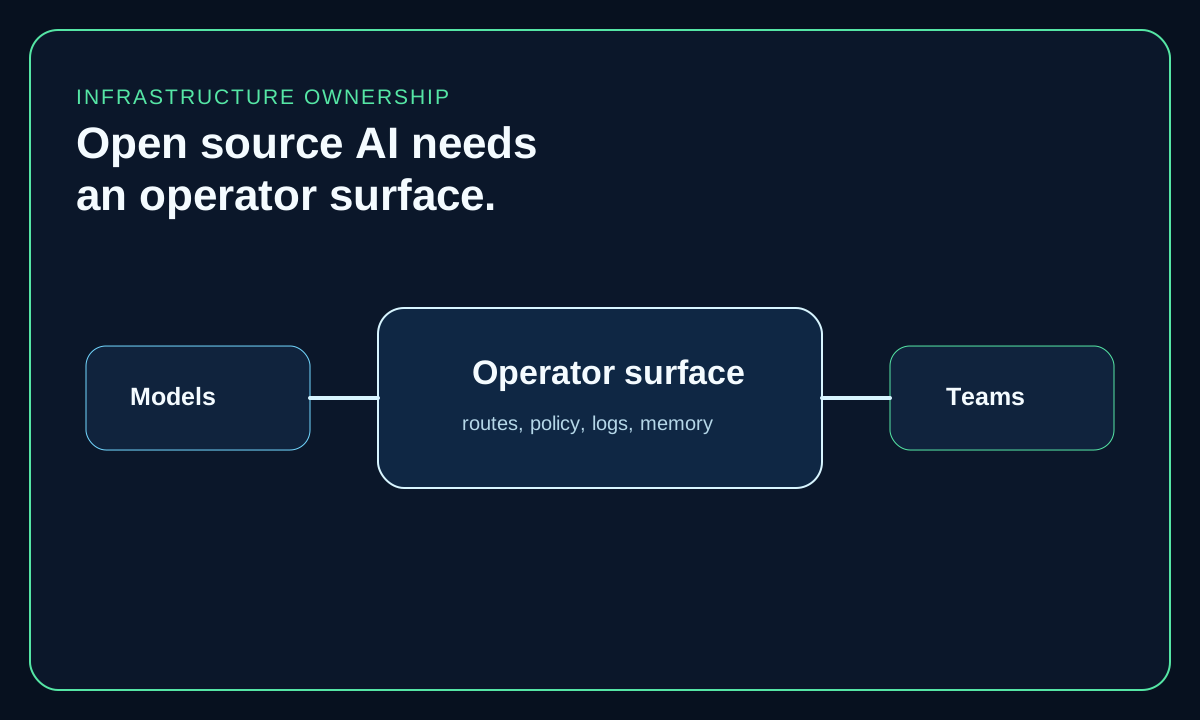
Open models and open code are important because they increase choice and reduce dependency. But openness alone does not make an AI system ready for company work.
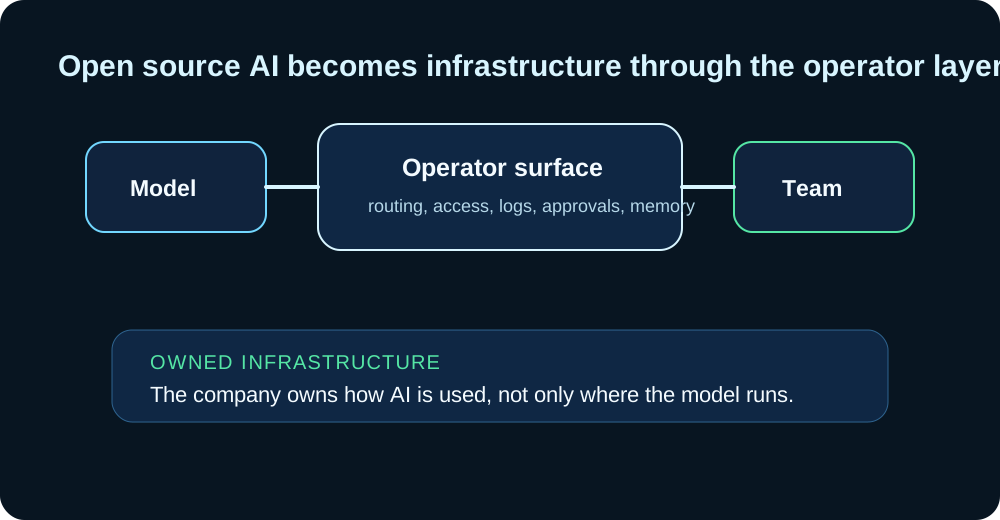
A company still needs an operator surface: identity, policy, environment choice, deployment boundary, audit trail, and memory return. Without that surface, open tools remain powerful parts that are hard to trust in repeated workflows.
Essay
The operator surface makes open tools usable
The operator surface is the practical layer where people ask, approve, route, review, and recover. It is what turns a model or repo into a workplace system.
ChipOS should make open AI usable without pretending the model itself is the whole product. The product is the controlled environment where open capability can move safely.
- Identity: who is acting and under which workspace?
- Policy: what rules and refusals apply?
- Deployment: where does the system run and what can it touch?
- Audit: what evidence and diffs survive review?
- Memory: what returns after the work is done?
Essay
Open source should reduce dependency, not create a new mess
A team can adopt open tooling and still create a fragile system if every script, model, and interface is wired together informally. The ownership benefit appears only when the pieces sit behind a surface operators can understand.
The goal is not to hide open source. The goal is to make it usable enough that non-specialist operators can rely on it without turning every workflow into an engineering rescue.
Essay
The next move
Pick one open AI capability and define the operator surface around it: user, workspace, allowed data, routing path, review step, deployment boundary, and memory return.
What to keep
The residue.
- Open source AI needs an operator surface to become company infrastructure.
- Models and code are parts; the governed surface is the usable system.
- Open adoption should reduce dependency without creating operational chaos.
- ChipOS turns open capability into owned workflow control.
Operator view
Turn the essay into a company decision.
FAQ
Short answers for search and operators.
Is open source AI enough for ownership?
No. Open source helps, but ownership also needs identity, policy, deployment boundaries, audit trails, and memory return around the tools.
What is an operator surface?
It is the interface and control layer through which people use AI safely: who can act, what data is allowed, what tools can run, what needs review, and what memory returns.
How should companies start with open source AI?
Start with one workflow and define the operator surface around one open capability before expanding into a larger stack.
Sources
Where this connects inside ChipOS.
- ChipOS Open SourceUsed for the public source and open infrastructure positioning.
- ChipOS InfrastructureUsed for the owned infrastructure layers around open capability.
- Self-Hosted AI Starts With the Data BoundaryUsed for the boundary-first approach to infrastructure ownership.
Across the ecosystem
Comments
Leave a signal for Chip.
Add a correction, operator note, source context, or practical consequence. Comments enter moderated review before they become public.