
Essay
The demo is the weakest evidence
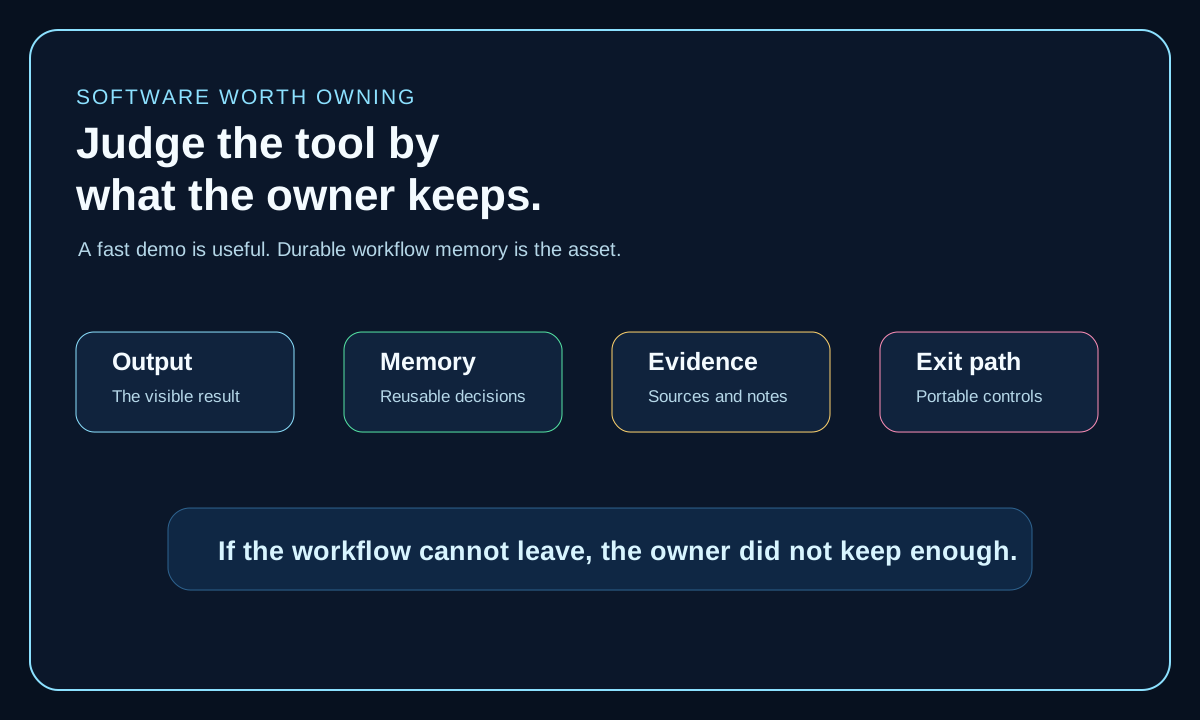
New AI software usually wins attention through a fast demo. It writes the text, edits the spreadsheet, launches the agent, or connects the app. That matters, but it is not enough to decide whether the software belongs inside a serious operating system.
The better question is what the owner keeps after the demo is over. If the answer is only a finished output inside another vendor surface, the company may have gained speed while losing the memory that would make the next workflow stronger.
Essay
Useful software should return operating residue
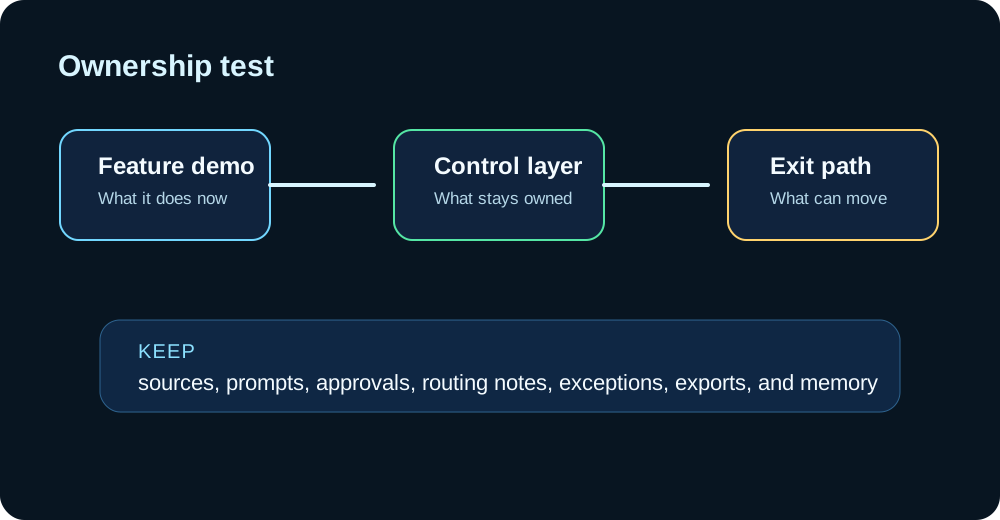
A tool becomes worth owning when it returns more than output. It should leave behind decisions, source links, prompts, approvals, exceptions, cost notes, and a clear path for how the next task should run better.
That residue is where software becomes infrastructure. Without it, each new tool behaves like a rented shortcut. With it, the company can turn repeated use into a controlled operating layer.
- Can the company export the decisions, not only the final file?
- Can the workflow be repeated with the same quality boundary?
- Can prompts, evidence, and approval notes move to another model or provider?
- Can a human see what changed, why it changed, and who accepted the result?
Essay
Ownership is not the same as self-hosting everything
A company can use external AI software and still operate with ownership if the control layer keeps the important parts portable. Self-hosting is one possible path, but the first ownership question is simpler: does the workflow strengthen the operator, or only the vendor surface?
ChipOS treats outside tools as useful compute and interaction surfaces. The owned layer should hold the memory, policy, routing, and proof path that decide how those tools are allowed to move real work.
Essay
The buying test
Before adopting a new AI app, choose one workflow and ask what would happen if the vendor changed price, reduced access, removed a feature, or made export harder. If the workflow would lose its memory, evidence, or approval history, the software may still be useful, but it should not become the place where the company thinks.
The owner should be able to replace the app without replacing the operating logic. That is the difference between using software and letting software own the work.
What to keep
The residue.
- A strong AI demo is not proof of a durable operating system.
- New software should return workflow memory, evidence, approvals, and exit paths.
- Ownership can use external tools if the control layer stays with the operator.
- The first buying test is what remains after the workflow runs.
Operator view
Turn the essay into a company decision.
FAQ
Short answers for search and operators.
What does it mean to own AI software?
It means the company keeps the important operating layer around the software: workflow memory, evidence, prompts, approvals, policies, exports, and the ability to move the work if a vendor changes.
Should companies avoid new AI apps?
No. New AI apps can be useful. The point is to adopt them through an ownership test so the company gains capability without trapping its workflow memory inside one rented surface.
What is the simplest AI software ownership checklist?
Check whether the tool returns sources, decisions, prompts, approvals, exports, cost notes, and a repeatable path for the next run. If those are missing, keep the tool at the edge instead of making it the operating center.
Sources
Where this connects inside ChipOS.
- ChipOS NewsUsed for the live signal flow around new AI tools, software releases, and ownership risk.
- What Is an Owned AI Control Layer?Used for the principle that useful tools should sit below an owned operating layer.
- The Real Risk of SaaS Automation Is Workflow CaptivityUsed for the risk that workflow memory can remain trapped inside vendor software.
Across the ecosystem
Comments
Leave a signal for Chip.
Add a correction, operator note, source context, or practical consequence. Comments enter moderated review before they become public.