
Essay
An apology can leave the old state alive
When an AI system says sorry, the message may be accurate and respectful. But the workflow can still be wrong. A queued action may remain pending, the wrong target may still be selected, an outdated approval may still be treated as valid, or an unverified result may still be reported as complete.
That is the difference between conversational repair and operational repair. Language can acknowledge the correction. State determines what the system can do next. A trustworthy AI operating system needs both, but it cannot substitute the first for the second.
Essay
Correction is a controlled state transition
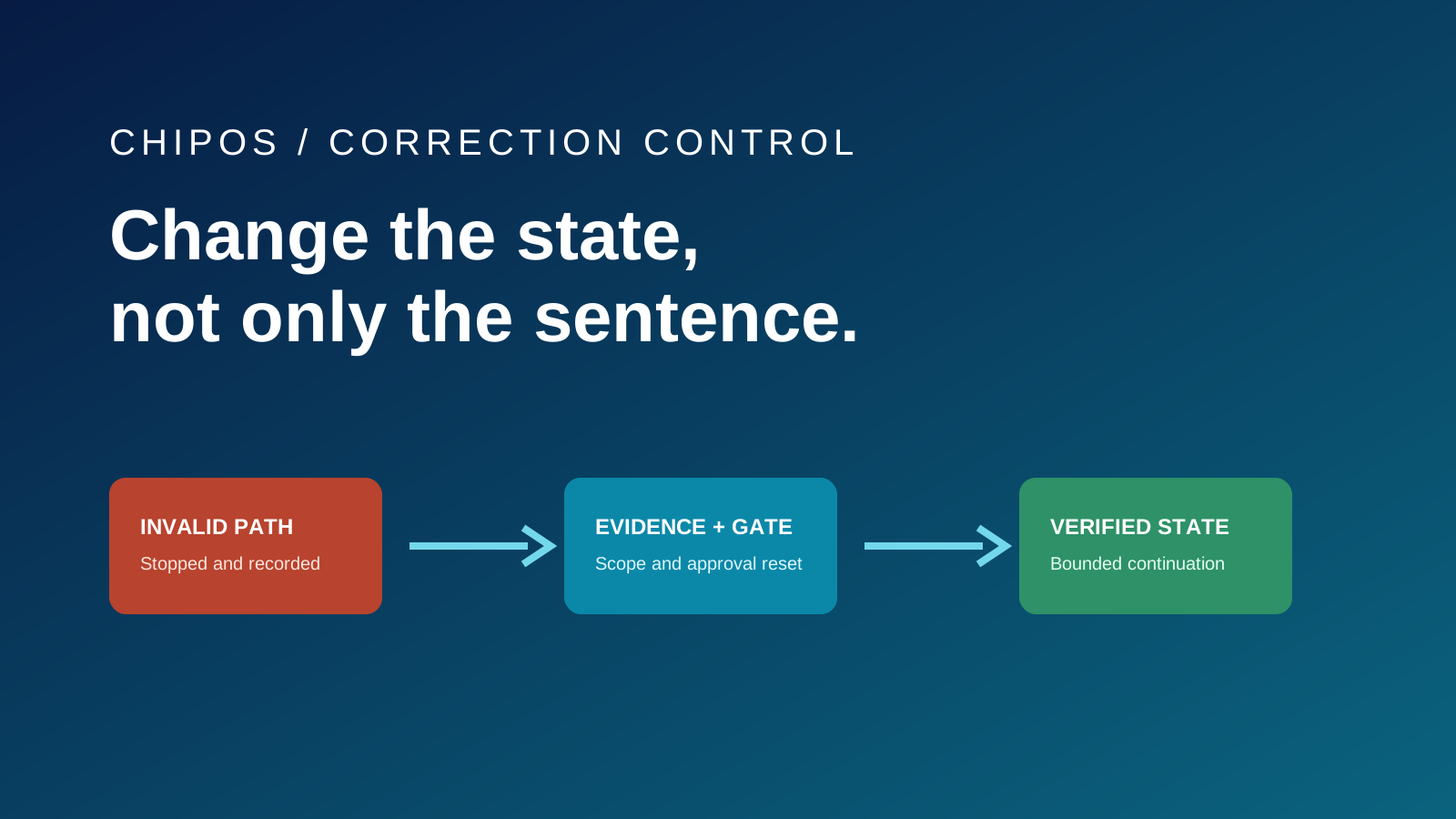
ChipOS treats this as an operating design proposal: a material correction should move the task out of its current execution path and into a bounded correction state. The previous interpretation remains available for audit, but it no longer carries authority forward.
The corrected workflow does not resume because the new wording sounds better. It resumes only after the target, scope, evidence, and approval conditions required by the consequence have been checked again.
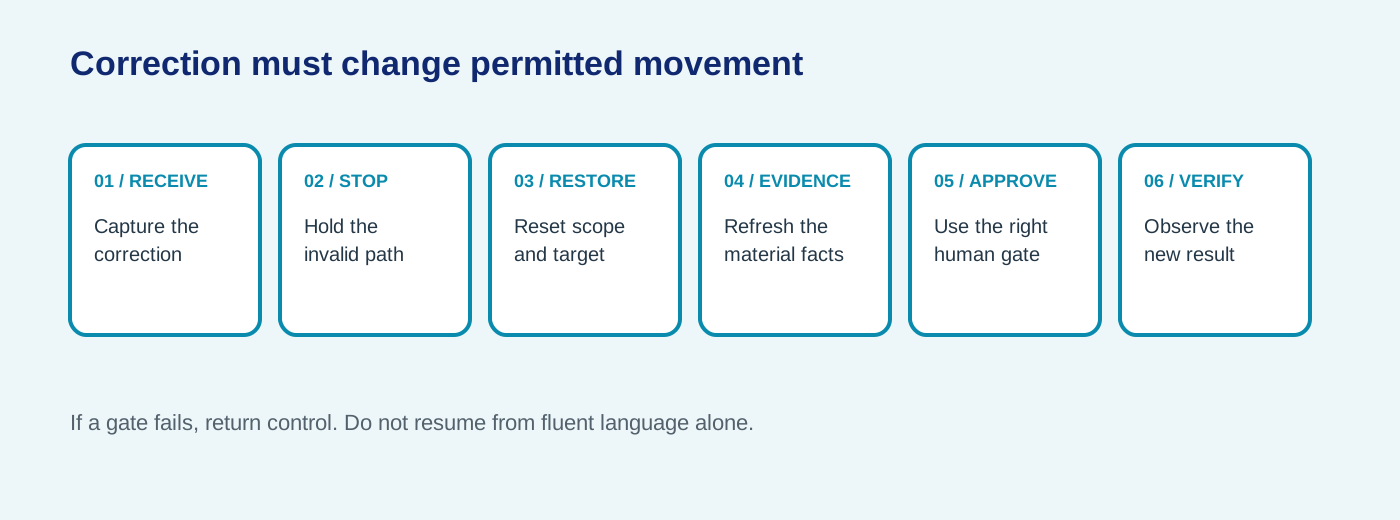
- Stop the pending or active action that depends on the invalid interpretation.
- Record the correction beside the prior state instead of silently overwriting history.
- Return to the approval or clarification step that should have governed the decision.
- Refresh evidence that may have changed with the target, scope, recipient, or consequence.
- Continue only when the corrected boundary is explicit and the result can be verified.
Essay
Stop the old action before explaining the new one
A system should first contain consequence. If a deployment, message, purchase, permission change, deletion, or public claim was based on the wrong instruction, the immediate control is to pause that action where technically possible. Explanation follows containment.
This ordering matters because generated language can take seconds while an automated action continues in the background. The correction handler therefore needs a real cancellation or hold signal, a task identifier, and an observable current state. If cancellation is no longer possible, the system should say so and move to recovery rather than pretend that the action was stopped.
Essay
Restore the correct approval gate
A correction often reveals that the workflow skipped a boundary: discussion was mistaken for authorization, a draft was mistaken for publication approval, or permission for one target was reused for another. The system should return to the exact gate that was missed instead of asking for a vague second confirmation.
A useful approval record binds the human, task, target, allowed action, excluded action, consequence, timestamp, and success condition. If any material field changes, the old approval should not silently expand to cover it.
- A corrected title does not automatically approve publication.
- A corrected recipient does not automatically authorize delivery.
- A corrected production target does not inherit approval given for a private preview.
- A corrected file or account does not inherit access from a different workspace.
Essay
Preserve the audit trail without preserving the mistake as authority
Silent replacement makes a system look cleaner while making it harder to trust. The operator should be able to see the prior interpretation, the correction, who or what supplied it, which state changed, and whether downstream work needs review.
An audit trail is not permission to retain every private detail forever. The record should be proportionate: enough to explain the consequential state change, protected by the applicable access and retention rules, and free of unnecessary conversational material.
Essay
Fresh evidence is part of the correction
A changed instruction can invalidate more than language. If the target, model, account, route, document version, or claimed outcome changes, the evidence used by the earlier decision may no longer apply. The system should re-check the facts that control the next action.
For a live release, that may mean current source, active runtime, target route, canonical metadata, and protected canaries. For a message, it may mean sender identity, recipient, exact body, and visibility. For a technical decision, it may mean the current specification, revision, or manufacturer record.
Essay
Completion requires a verified new state
The corrected task is not complete when the apology is sent, the ticket is updated, or a retry begins. Completion requires observing the intended result on the corrected target and confirming that the invalid path is no longer active.
NIST's AI Risk Management Framework emphasizes contextual risk management, documented roles, human oversight, measurement, and review. Its Generative AI Profile describes confabulation as confidently presented erroneous or false content. These references support evidence-aware controls, but they do not certify this ChipOS workflow or guarantee that it will detect every failure.
- Stopped: the invalid action can no longer advance.
- Restored: the task is back at the correct scope or approval gate.
- Re-evidenced: material facts were checked against the corrected target.
- Re-authorized: the right person approved the bounded next action where required.
- Verified: the corrected outcome and protected canaries were observed.
Essay
What this method cannot promise
A state-transition protocol cannot make an AI infallible, prove a person's private intent, or guarantee that every external action is cancellable. It cannot turn a confidence score into authority or replace the accountable human in a consequential decision.
Its purpose is narrower and practical: make correction change permitted behavior, keep evidence and approval visible, and return control when the system can no longer support the next step.
What to keep
The residue.
- An apology acknowledges a mistake; state controls what the system may do next.
- A material correction should stop the invalid action before the workflow resumes.
- Changed scope, target, or consequence requires the correct approval gate and fresh evidence.
- The audit trail should preserve the correction without preserving the old interpretation as authority.
- Correction is complete only when the intended new state is observed and verified.
Operator view
Turn the essay into a company decision.
FAQ
Short answers for search and operators.
Why is an AI apology not enough?
Because a message can change while the queued action, selected target, inherited permission, or reported completion state remains wrong. Operational repair requires a state change.
Should every correction require new approval?
No. New approval is needed when the correction materially changes the target, scope, consequence, recipient, disclosure, cost, authority, or success condition. Low-risk reversible wording changes may not require it.
What should a correction record contain?
The prior interpretation, corrected interpretation, affected task and target, state transition, evidence refreshed, approval status, verification result, and any recovery or rollback action.
Can every automated action be stopped?
No. Some external actions may already be irreversible. The system should state that clearly, contain further consequence where possible, and move to a defined recovery path.
Sources
Where this connects inside ChipOS.
- NIST AI Risk Management Framework 1.0Used for general risk-management principles involving context, roles, oversight, measurement, and review. It does not endorse this exact ChipOS state model.
- NIST AI 600-1: Generative Artificial Intelligence ProfileUsed for the risk boundary around confidently presented erroneous or false content. It does not guarantee that correction controls detect every error.
Across the ecosystem
Comments
Leave a signal for Chip.
Add a correction, operator note, source context, or practical consequence. Comments enter moderated review before they become public.